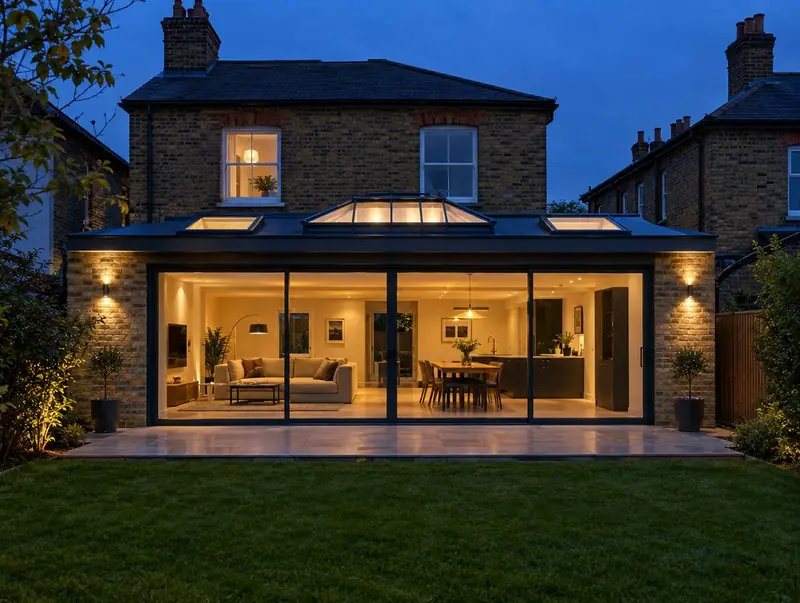
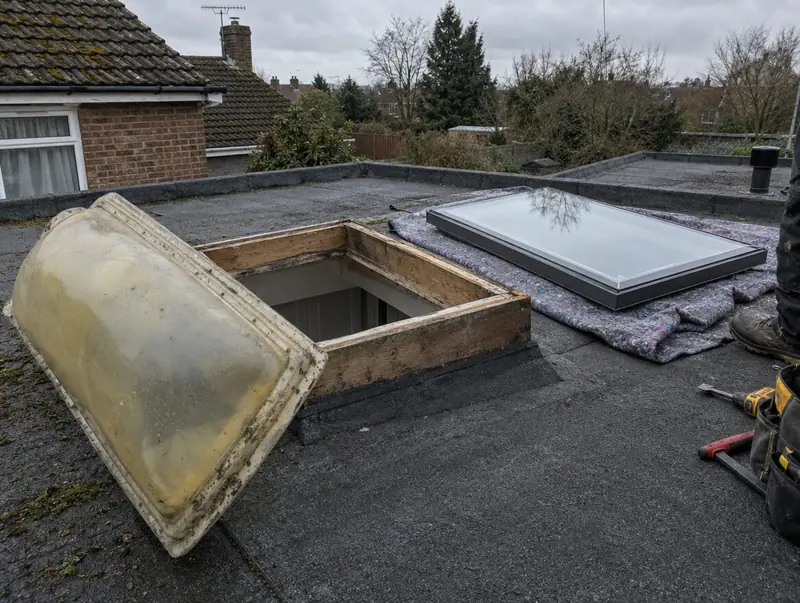
Most rooflights that need replacing have one of three problems: misting between the panes, leaks at the kerb, or a plastic dome that has gone brittle and cloudy. Sometimes the unit is fine and the leak is elsewhere on the roof, so we look before recommending a new one. Where replacement does make sense, the opening is usually already there, which keeps the job simple. Most single swaps are done in a day, with the roof weathertight before the fitters leave.
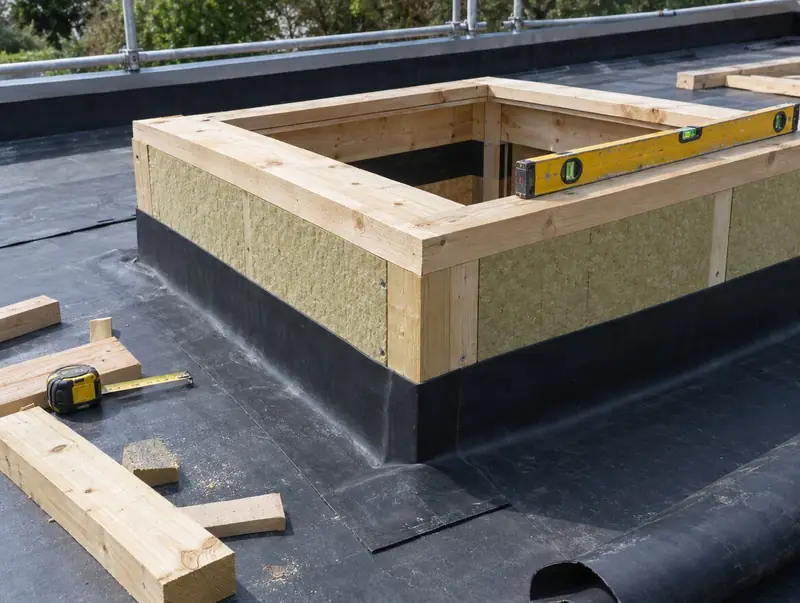
The kerb decides the price. If the existing upstand is sound, square and high enough, a like-for-like swap is straightforward. If it is rotten, too low for a modern glass unit, or a different size from anything made today, we take it off and build a new insulated upstand, then dress the roof covering back up it. We supply and fit a new rooflight, or fit one you have already chosen, and we deal with the old unit so you are not left with it in the garden.
What's included
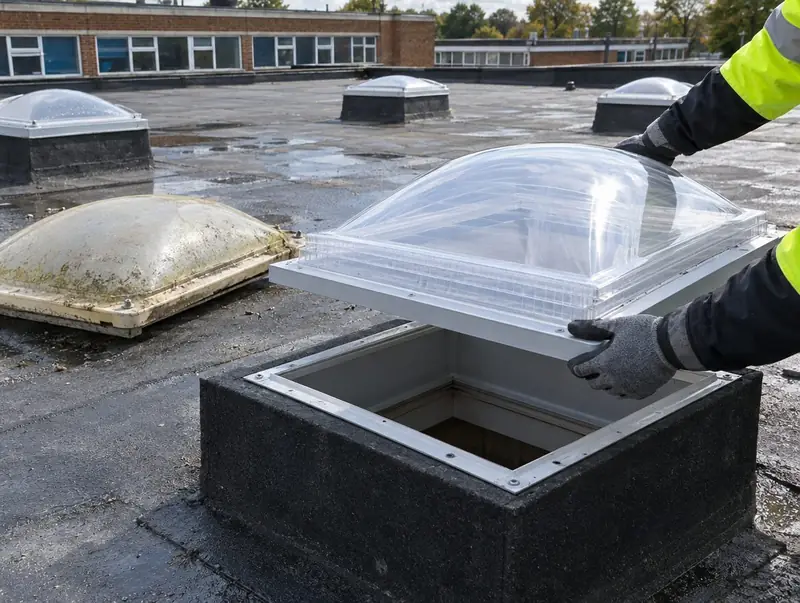
- Old rooflight or dome unscrewed, lifted out and taken away for disposal
- Kerb inspected for rot, height, level and fall once the old unit is off
- Packers, an adaptor or a new insulated upstand where the old kerb falls short
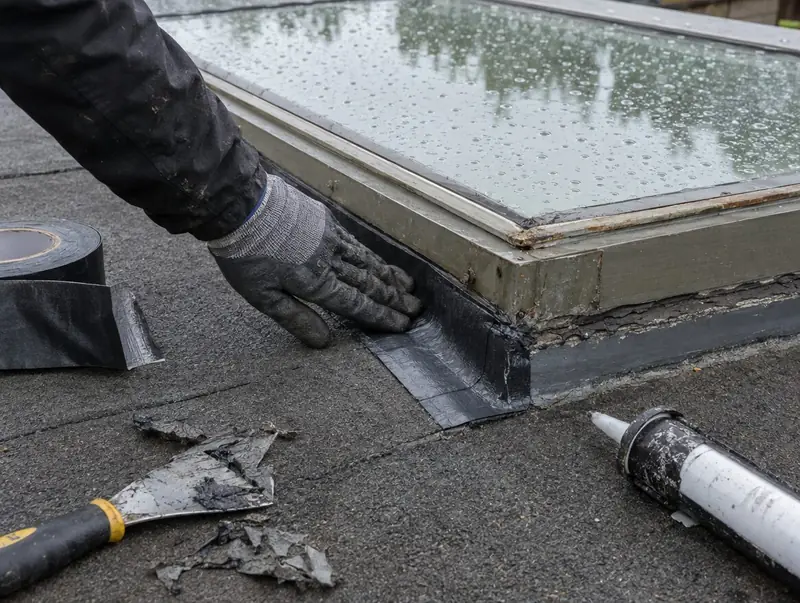
- Roof membrane repaired and turned up where it meets the kerb
- New unit bedded, fixed and sealed exactly as its maker shows
- Internal reveal made good where the old trim or plaster was damaged
- Building notice given to the council in England and Wales, with its fee on the quote
Guide prices
Like-for-like swap
Old dome or unit removed and disposed of, new glass rooflight fitted to the existing sound kerb
New upstand and swap
Old kerb taken off, new insulated upstand built, roof covering made good, new unit fitted
Opening or large unit
Electric or larger replacement, including making good inside
Guide ranges for supply & fit; building control notice fee extra in England and Wales. Your price is fixed in a written quote after we have seen photos or surveyed. Scaffold, access towers or a crane are priced separately if the job needs them, and building control or building warrant fees, where a job needs them, are shown as their own line.
How we fit a replacement rooflight
- Look at what has failedWe start with photos or a free survey visit to see whether the unit, the kerb or the roof around it is the real problem. Replacing a good rooflight to cure a roof leak wastes your money.
- Match the new unitWe size the replacement to the kerb, or to a new upstand if the old one is coming off. Glass is made to order, so the sizes are checked twice before ordering.
- Protect inside and outDust sheets go down below the opening and the area around it on the roof is cleared. Where the old unit is fragile, the fitters work from boards or a tower, never on the dome.
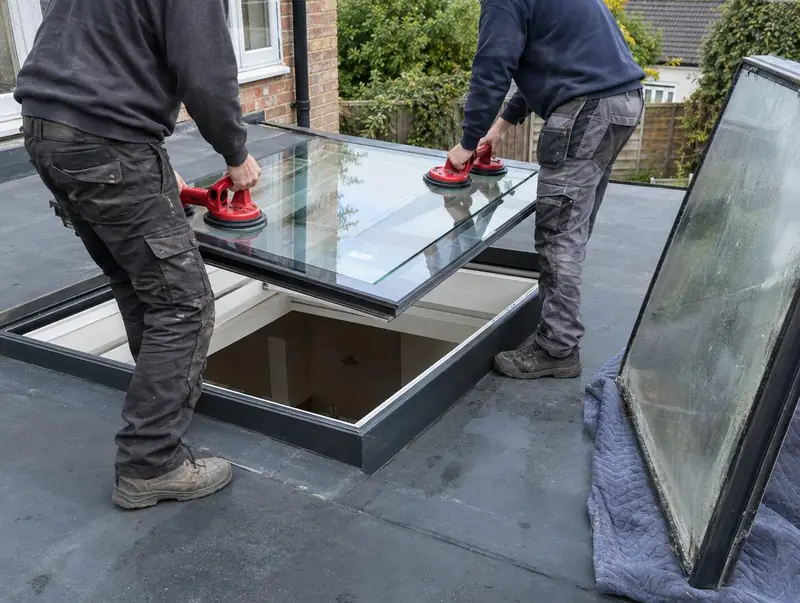
- Take the old unit outFixings are cut or unscrewed and the old unit lifted clear. Old sealant, felt scraps and nails come off the kerb so the new one beds onto clean timber.
- Fit and weather the new oneThe new rooflight is bedded and fixed, then the membrane is sealed to it in the way the roof covering needs. Torch-on felt is warmed with a hot-air gun, never flamed near the frame.
- Finish and paperworkInside, damaged trim or plaster is made good ready for decoration. You get the product warranty papers and, where the job was notified, the building control completion paperwork.
Things we check before quoting
Is the kerb worth keeping?
We decide whether the existing kerb can stay only after checking it for rot, height and squareness. A sound timber kerb at the right size saves time and roof work. A soft or low one gets replaced, because a new unit on a failing kerb will leak at the joint however well it is sealed.
Dome to glass upgrades
We check that the opening and kerb suit a flat glass unit before quoting a dome-to-glass swap. Glass is heavier, usually needs a set fall, often around 5°, and many makers want the upstand at least 150 mm above the roof, which an old dome kerb may not reach.
Energy rules for the new unit
We make sure the replacement meets the current energy limit, not just the old unit's performance. In England and Wales a rooflight in an existing home is expected to reach 2.2 W/m²K, and any replacement must be no worse than the one it replaces, so an old single-skin dome is never the benchmark.
Leaks that are not the rooflight
We look at the roof around the unit before blaming the rooflight. Split membrane, blocked outlets and water ponding against the kerb can all show up as drips under the glass, and none of them is cured by a new unit, so we tell you if a roof repair is the better spend.
Inside finishes
We check the condition of the plaster and trim around the opening from inside. Old leaks often leave blown plaster or stained boards, and we price making those good separately so you can see what the replacement costs on its own.
Already bought the replacement?
If you have ordered a replacement rooflight yourself, we can take out the old unit and fit yours. Send us the product details first so we can check it against the kerb, because a replacement a few millimetres too small for the old upstand is a common problem. We inspect the delivery before removing anything, so you are never left with an open roof and a damaged unit. Transit damage goes back to the seller, the product warranty stays with the maker or seller, and our written guarantee covers our fitting, done to the maker's instructions.
Planning and building regulations
A replacement rooflight in a house or flat in England or Wales is a controlled fitting. It has to be self-certified by an installer registered with a competent person scheme, or notified to building control. We are not registered with a competent person scheme, so replacements we fit are notified to building control with a building notice, and the council's fee is its own line on the quote. In Scotland, replacing the whole unit including the frame does not need a warrant, but the new rooflight must still meet the standards in full.
| Nation | What usually applies |
|---|---|
| England | New openings usually need building regulations approval. Replacements are controlled fittings; we are not scheme-registered, so we notify them to building control and show the fee on the quote. Rooflights in existing homes must meet 2.2 W/m²K (roof windows 1.4 or WER Band B). Most house rooflights are permitted development if they project no more than 0.15 m; listed buildings need consent. |
| Wales | New openings generally need building regulations approval; replacements need a scheme installer's certificate or a building notice, and we use a building notice. Energy limits are 2.2 W/m²K for rooflights and 1.4 for roof windows. Rooflights aren't permitted development in conservation areas, National Parks, AONBs or World Heritage Sites. |
| Scotland | New rooflights need a building warrant. Replacing a rooflight complete with its frame doesn't, but must meet the standards, including 1.6 W/m²K. Householder permitted development rights don't apply in conservation areas; listed buildings need consent. |
| Northern Ireland | New openings alter the roof structure, so expect a building control application; confirm with your council. Rooflights in existing homes must meet WER Band C or 1.6 W/m²K. Permitted development (Class B) allows up to 15 cm on road-facing slopes, at least 0.5 m from ridge, eaves and verge; not in conservation areas or listed curtilage. |
A summary, not legal advice. We confirm what applies to your address before you commit. Read the full guide.
Questions about rooflight replacement
Can a new rooflight go on my old kerb?
Often, yes, if the kerb is sound, square and the right size for the new unit. Some replacement units are made to suit common existing kerb sizes. If the old kerb is rotten, too low or an odd size, it is quicker and more reliable to build a new one than to pack and patch the old one.
Do I need building control for a replacement?
In England and Wales, yes, in one of two ways. Either the installer is registered with a competent person scheme and self-certifies the work, or the job is notified to the council's building control team, which charges a fee. We are not registered with a scheme, so replacements we fit are notified to building control, and the council's fee is shown on the written quote so it is not a surprise later.
How long does a replacement take?
A straightforward like-for-like swap on a sound kerb is usually a day's work, often less. Rebuilding the upstand, repairing the membrane or making good a damaged ceiling adds time. We give you an expected duration with the quote, but the weather on the day decides whether roof work can go ahead.
What happens to the old rooflight?
We take it away. Old domes, glass units and frames are removed from site as part of the job, so you are not left with a cracked dome in the garden or a heavy glass unit to dispose of. If you want to keep the old unit for any reason, tell us before the day and we will leave it with you.
Will the ceiling be damaged?
Changing the unit from the roof normally leaves the ceiling alone, but the trim around the reveal sometimes has to come off, and old leaks may already have spoiled the plaster. We look at the inside before quoting and price any making good as a separate line, so there are no surprises when the old unit comes out.