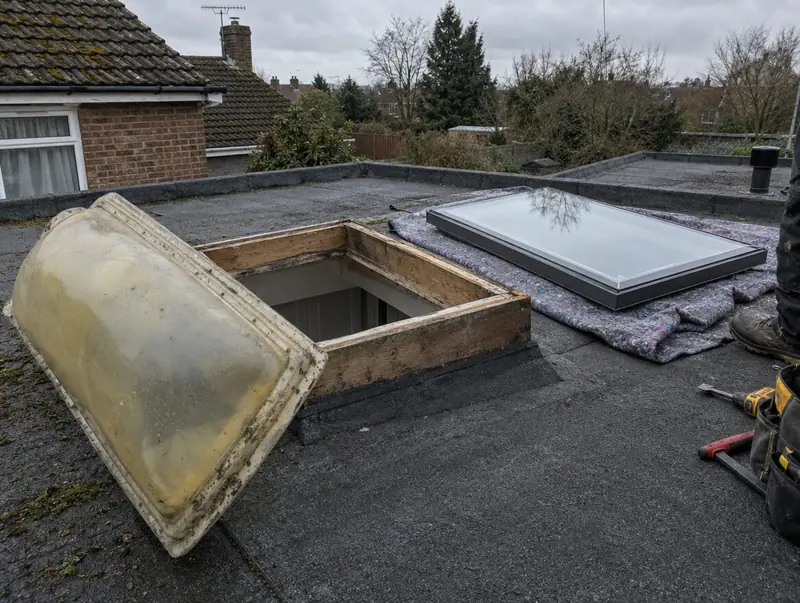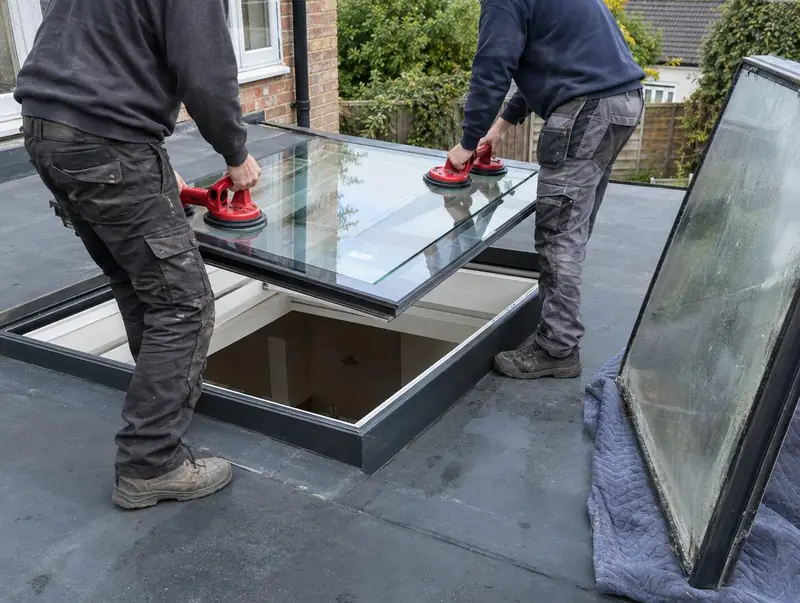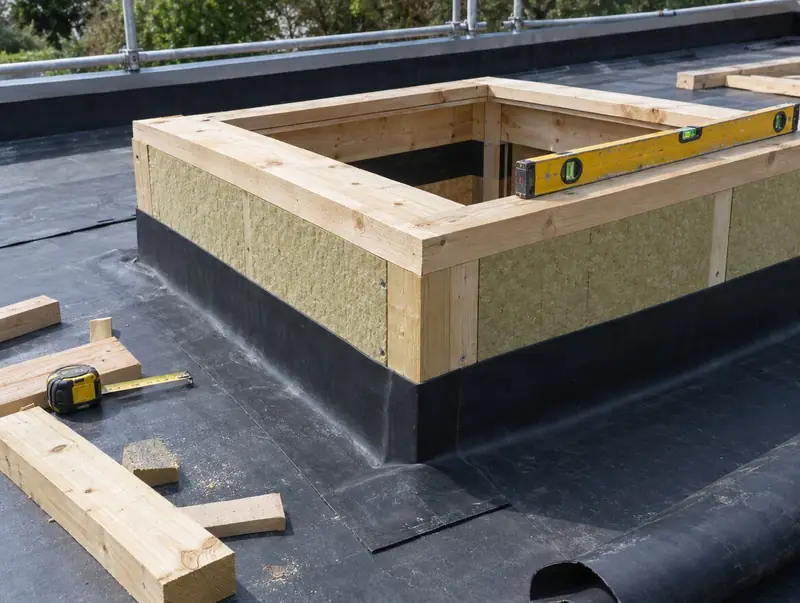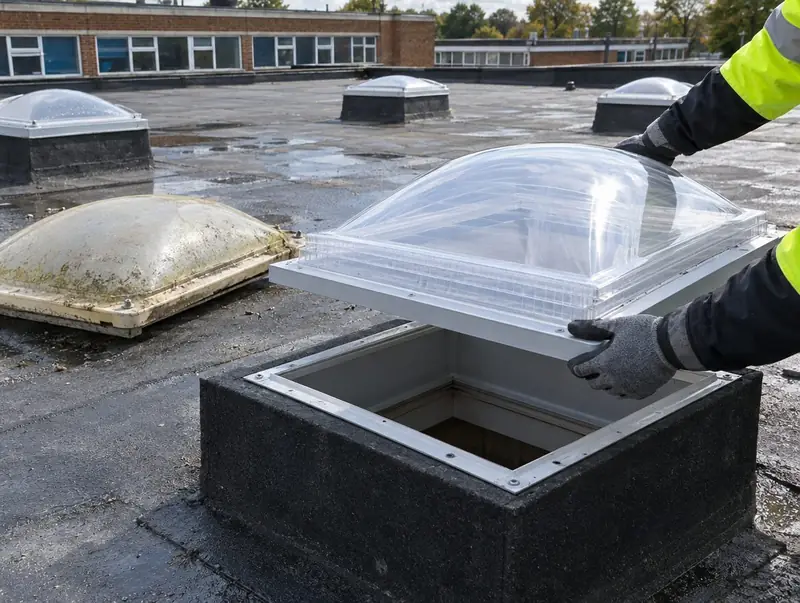
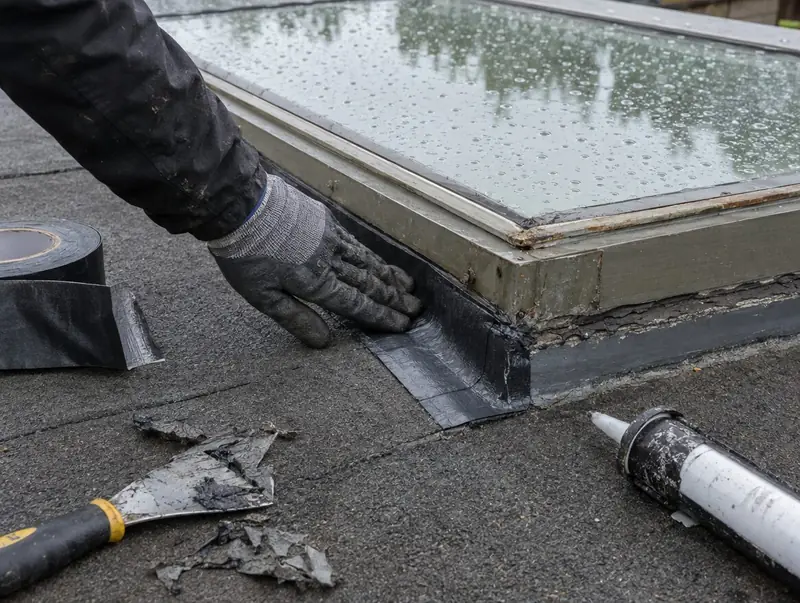
A drip under a rooflight does not always mean the rooflight is leaking. Water can come through failed sealant at the frame, a split in the membrane where it turns up the kerb, flashing that has lifted, or a rotten upstand. It can also be condensation running off cold glass, which looks like a leak but needs a different fix. The point of a repair visit is to find out which, so you only pay to fix what has actually failed.
Repair visits are charged, and the price is confirmed before we book you in. Sending photos of the rooflight from outside, the stain inside and anything that changes with heavy rain often lets us narrow it down beforehand. On the visit, small fixes such as resealing a frame joint can often be done there and then. Bigger repairs to the membrane or kerb timber get a separate written price, and if replacement really is the better answer, we will say so plainly.
What's included
- Outside inspection of glass, frame, sealant, flashing and roof covering
- Inside check of stains, frame drainage channels and the reveal
- Controlled water test where it helps pin down the entry point
- Failed sealant cut out, joints cleaned, dried and resealed
- Lifted flashing or tape removed and renewed
- Membrane splits at the upstand cut back and patched
- Rotten kerb sections replaced where the timber has gone soft
Guide prices
Diagnostic visit
Roof and inside inspected, cause found, written repair price
Reseal and re-flash
Failed sealant and flashing taken out, joints cleaned, resealed and taped
Upstand or membrane repair
Rotten kerb section or roof membrane at the upstand repaired
Guide ranges. The first visit is charged and priced before booking; any repair is priced in writing before work starts. Scaffold, access towers or a crane are priced separately if the job needs them, and building control or building warrant fees, where a job needs them, are shown as their own line.
How a repair visit works
- Photos and descriptionTell us when it leaks, how heavily, and whether wind direction makes a difference. Photos of the roof and the stain help us bring the right materials on the first visit.
- Visit price agreedWe confirm the cost of the diagnostic visit before booking. The visit covers the inspection and a written repair price, plus small fixes we can finish within it.
- Check the roof firstThe fitter looks at the membrane, outlets and the joint between roof covering and kerb, then at the sealant and fixings on the rooflight frame itself.
- Then insideStains are traced back to the frame or reveal. Where the cause is unclear, a careful water test on one area at a time narrows it down.
- Repair or planSmall faults are fixed on the visit. Larger work, such as membrane or kerb repairs, is priced in writing so you can decide before any more is spent.
- Advice on upkeepYou get a short note of what was found and done, plus what to keep an eye on, such as debris against the kerb or sealant worth checking each year.
Things we check before quoting
Leak or condensation
We work out whether the water is coming from outside or forming inside on cold glass. Condensation tends to appear on cold, still days and runs off the frame, while a true leak usually follows rain, and the two have very different fixes.
Water lying against the kerb
We check whether rainwater sits against the upstand after it stops raining. Ponding at the kerb puts constant pressure on the joint, and a low upstand or blocked outlet can turn a minor sealant gap into a regular leak.
Upstand height and condition
We measure the kerb and probe the timber for softness. An upstand well under the commonly cited 150 mm leaves little margin above standing water, and rot in the kerb means resealing alone will not last.
Age of the rooflight
We weigh the age and condition of the unit before recommending a repair. On an old dome or a frame with several failures, repeated repairs can cost more over time than a replacement, and we will show you both prices if that is the case.
Warranty and who fitted it
We ask who fitted the rooflight and when before working on it. If it is fairly new, the installer's guarantee or the product warranty may cover the fault, and our work on it could affect that, so it is worth checking first.
Planning and building regulations
Most leak work, such as resealing, re-flashing or patching the membrane, is treated as repair rather than new building work, so building control is not usually involved. That changes if the repair turns into replacing the rooflight, which in a home in England or Wales is a controlled fitting, or into rebuilding the opening. Planning rarely comes into a like-for-like repair, but listed buildings can need consent even for small changes to materials, so tell us if yours is listed.
| Nation | What usually applies |
|---|---|
| England | New openings usually need building regulations approval. Replacements are controlled fittings; we are not scheme-registered, so we notify them to building control and show the fee on the quote. Rooflights in existing homes must meet 2.2 W/m²K (roof windows 1.4 or WER Band B). Most house rooflights are permitted development if they project no more than 0.15 m; listed buildings need consent. |
| Wales | New openings generally need building regulations approval; replacements need a scheme installer's certificate or a building notice, and we use a building notice. Energy limits are 2.2 W/m²K for rooflights and 1.4 for roof windows. Rooflights aren't permitted development in conservation areas, National Parks, AONBs or World Heritage Sites. |
| Scotland | New rooflights need a building warrant. Replacing a rooflight complete with its frame doesn't, but must meet the standards, including 1.6 W/m²K. Householder permitted development rights don't apply in conservation areas; listed buildings need consent. |
| Northern Ireland | New openings alter the roof structure, so expect a building control application; confirm with your council. Rooflights in existing homes must meet WER Band C or 1.6 W/m²K. Permitted development (Class B) allows up to 15 cm on road-facing slopes, at least 0.5 m from ridge, eaves and verge; not in conservation areas or listed curtilage. |
A summary, not legal advice. We confirm what applies to your address before you commit. Read the full guide.
Questions about rooflight leak repairs
Why is my rooflight leaking?
The usual causes are sealant that has dried and cracked, flashing or tape that has lifted, a split in the roof membrane where it turns up the kerb, or a kerb that has rotted. Ponding water against a low upstand makes all of these worse. Occasionally the leak is elsewhere on the roof and the water simply travels to the rooflight.
Is the diagnostic visit charged?
Yes. Finding a leak takes time on the roof and inside, so the visit is charged, and we confirm the price before booking. If the fault is small, such as a failed sealant joint, it can often be fixed within that visit. Anything bigger is priced separately in writing, and you decide whether to go ahead.
Can you repair it, or does it need replacing?
Many leaks are repairable, especially where the unit is in good condition and the problem is sealant, flashing or the membrane at the kerb. Replacement makes more sense when the glass has failed, the frame is cracked or the dome has gone brittle. We tell you which we think applies and why, with prices for the options.
Will a reseal last?
A proper reseal, with the old sealant cut out, the joint cleaned and dried and the right product used, should last well. A smear of new sealant over old will not. How long it lasts also depends on the roof around it, which is why we look at drainage and the upstand before resealing.
What can I do before you arrive?
Put a container under the drip, move anything valuable out of the way and, if it is safe from a ladder, clear leaves or debris from around the rooflight. Do not climb onto a fragile roof or stand on an old dome. Note when the leak appears and send photos, as that helps us bring the right materials.