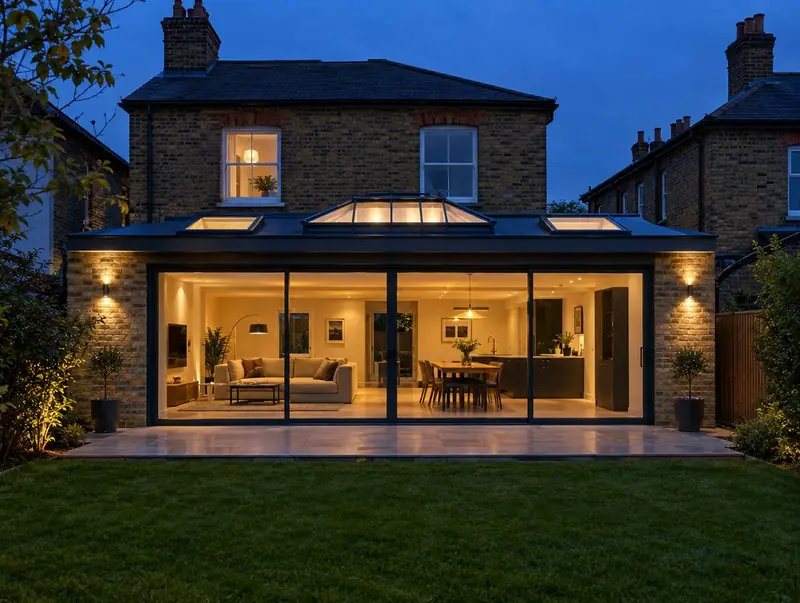
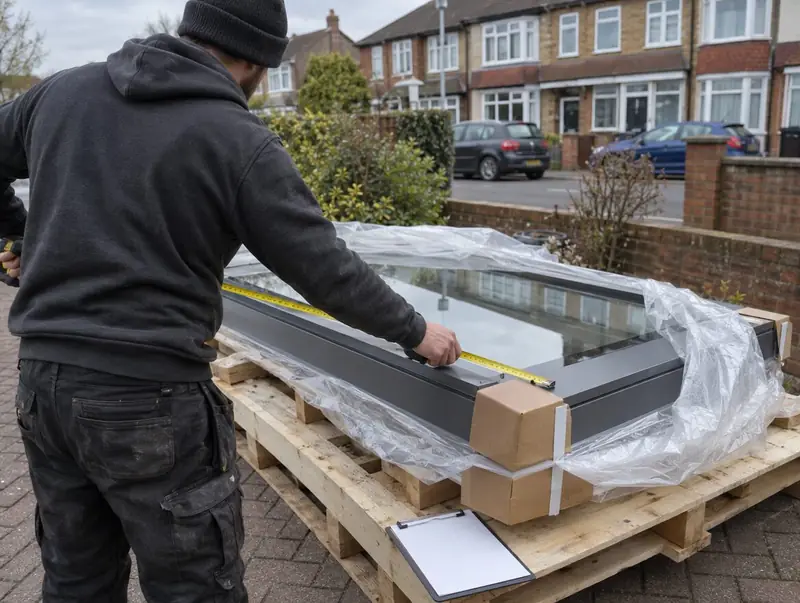
Plenty of people buy a rooflight first and look for a fitter second. Prices online are clear, delivery is quick, and then the box sits in the garage while the builder who promised to fit it goes quiet. That is the job this page is about. You supply the unit; we supply the labour, the fixings, the sealant and the know-how. Before anyone books a day, we ask for photos of the label, the box contents and the roof, plus the opening size measured timber to timber, so the price you get is for your actual job.
The most common snag with fit-only work is size. A rooflight sold by its outer frame size can need a noticeably smaller hole underneath, so an upstand built to the wrong figure will not take the unit. We compare the maker's drawing with your kerb before travelling. If the upstand is too low, out of square or rotten, we quote to put it right. Once fitted, the rooflight's product warranty stays with the maker or seller; our written guarantee covers the fitting, with its terms set out on your quote.
What's included
- Check of the delivered unit, glass, fixings pack and instructions before work starts
- Opening and upstand measured against the maker's drawing, timber to timber
- Upstand height, level and fall checked, and squareness confirmed across the diagonals
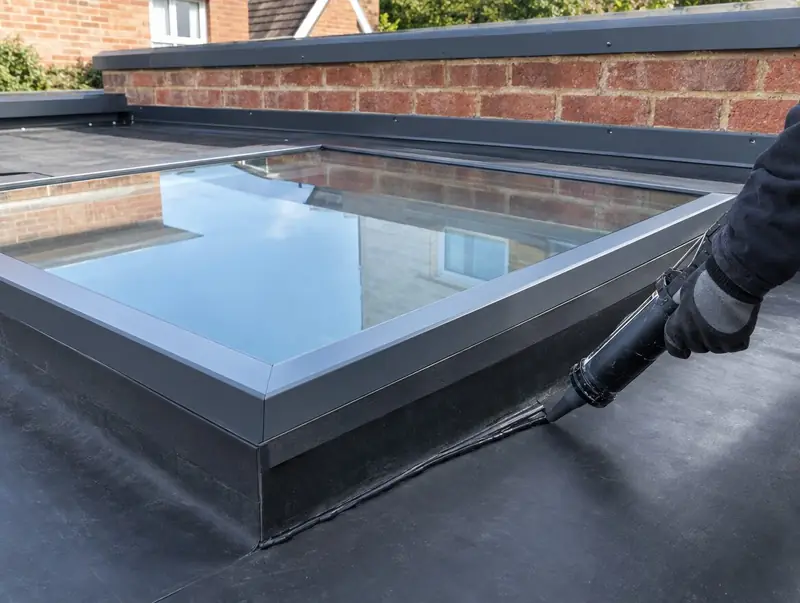
- Unit bedded on the sealant or tape the maker specifies, then screw-fixed
- Roof membrane dressed up the kerb and finished under the drip edge
- Internal reveal trimmed or lined, with the protective film removed at the end
- Opening tested where relevant, packaging taken away and paperwork handed back
Guide prices
Onto a ready upstand
Customer-supplied unit up to about 1.5 m², fitted to a prepared kerb, sealed and trimmed
With a new upstand
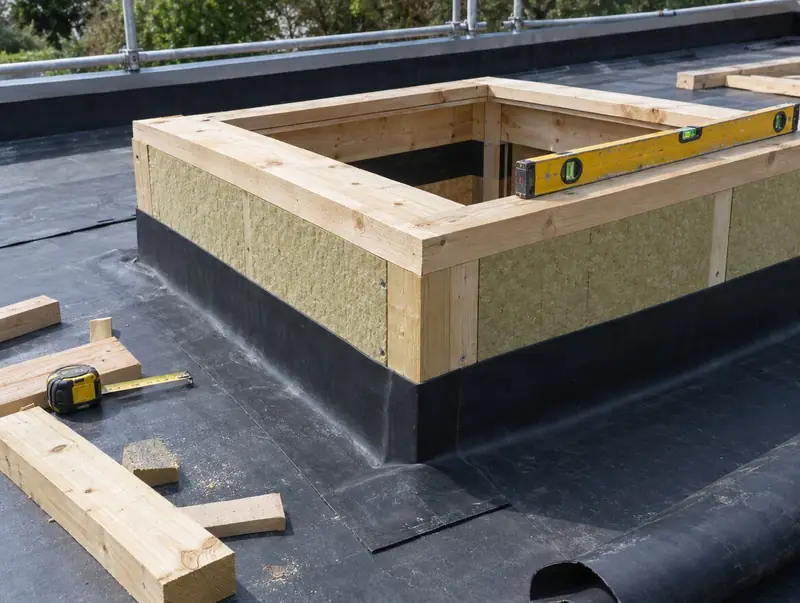
Insulated timber upstand built, membrane turned up and dressed, unit fitted and sealed
Large or heavy unit
Extra hands or lifting gear, larger openings, fixed or opening units
Guide ranges for labour only — you supply the rooflight. Your price is fixed in a written quote after we have seen photos or surveyed. Scaffold, access towers or a crane are priced separately if the job needs them, and building control or building warrant fees, where a job needs them, are shown as their own line.
How we fit a rooflight
- Send photos and sizesPhotograph the box label, the unit, the roof and the opening. Add the internal hole size and the upstand height so we can check the fit before pricing.
- Fixed labour price in writingYou get a written quote for the labour, with any upstand work or extra hands listed separately. Nothing is booked until you have agreed it.
- Unit checked on arrivalThe fitters unpack and inspect the rooflight with you, comparing the label with your order. Any damage or wrong part stops the job so you can raise it with the seller.
- Kerb preparedOld sealant, nails and loose felt come off the kerb top. Any packing needed to correct level or fall goes in, and the membrane is checked where it turns up.
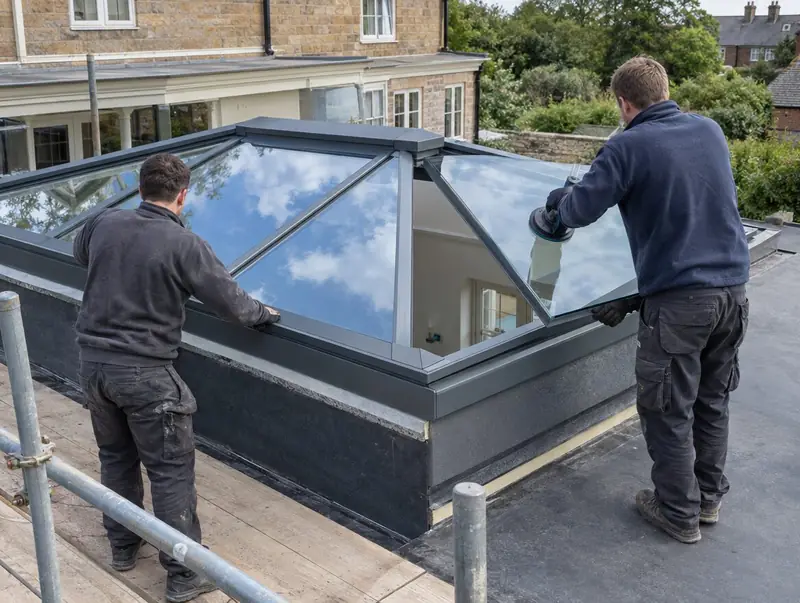
- Fixed to the instructionsThe unit is bedded, positioned with even clearance all round and screwed at the spacings the maker sets. Fixings are not overtightened, and impact drivers stay off the frame.
- Sealed, tested, handed overWeathering is completed, the reveal tidied and the glass cleaned. You get the maker's paperwork back, a note of what we did and our written workmanship guarantee.
Things we check before quoting
Internal versus external size
We check whether your rooflight's quoted size is the hole size or the outer frame size. Some makers quote one, some the other, and a unit sold as 1000 × 1000 mm external can need an opening of only 850 × 850 mm. Building the kerb to the wrong figure is the most common fit-only problem.
Upstand height above the roof
We measure how far the upstand stands above the finished roof surface, including any ballast or walkway. The figure commonly cited is at least 150 mm, from BS 6229, and some makers state their own minimum or limit their warranty below it. We follow the maker's figure and tell you before fitting if your kerb falls short.
Warranty conditions on your unit
We read the warranty terms that came with your rooflight before we fit it. A few sellers only give full cover if their own installer fits the unit, and some exclude the cost of taking out and refitting a supply-only product. Knowing this up front lets you decide with the facts in hand.
Delivery damage and missing parts
We ask you to open the delivery and check it as soon as it arrives, not on fitting day. Sellers usually want damage noted on the delivery paperwork and reported quickly, and some set a deadline such as 48 hours. One seller warns that installed items will not be refunded, so we never fit a unit with a query against it.
Access and lifting
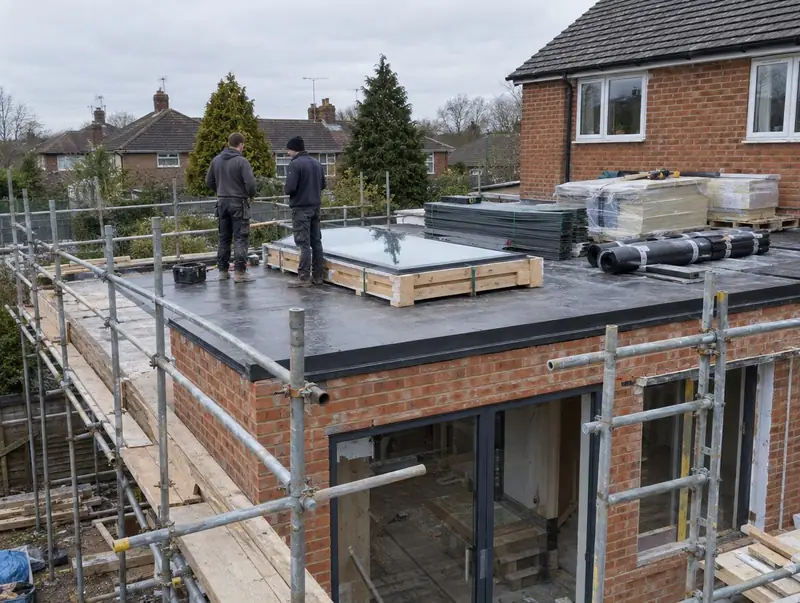
We check how the unit gets from your drive to the roof. A small fixed rooflight can go up a ladder with two people, but heavy triple-glazed or walk-on glass may need a tower, a scaffold or lifting gear, which we price on the quote rather than discover on the day.
Planning and building regulations
Fitting a unit you bought yourself does not change the paperwork. If it goes into a new opening, building regulations approval is generally needed, or a building warrant in Scotland. If it replaces an old rooflight in a home in England or Wales, it is a controlled fitting: either an installer registered with a competent person scheme self-certifies it, or the work is notified to building control. We are not registered with a competent person scheme, so we notify it to building control with a building notice and show the council's fee as its own line on the quote.
| Nation | What usually applies |
|---|---|
| England | New openings usually need building regulations approval. Replacements are controlled fittings; we are not scheme-registered, so we notify them to building control and show the fee on the quote. Rooflights in existing homes must meet 2.2 W/m²K (roof windows 1.4 or WER Band B). Most house rooflights are permitted development if they project no more than 0.15 m; listed buildings need consent. |
| Wales | New openings generally need building regulations approval; replacements need a scheme installer's certificate or a building notice, and we use a building notice. Energy limits are 2.2 W/m²K for rooflights and 1.4 for roof windows. Rooflights aren't permitted development in conservation areas, National Parks, AONBs or World Heritage Sites. |
| Scotland | New rooflights need a building warrant. Replacing a rooflight complete with its frame doesn't, but must meet the standards, including 1.6 W/m²K. Householder permitted development rights don't apply in conservation areas; listed buildings need consent. |
| Northern Ireland | New openings alter the roof structure, so expect a building control application; confirm with your council. Rooflights in existing homes must meet WER Band C or 1.6 W/m²K. Permitted development (Class B) allows up to 15 cm on road-facing slopes, at least 0.5 m from ridge, eaves and verge; not in conservation areas or listed curtilage. |
A summary, not legal advice. We confirm what applies to your address before you commit. Read the full guide.
Questions about fit-only rooflight installation
Can you fit a rooflight I bought online?
Yes, that is exactly what this service is for. Send us the product name or a link, photos of the roof and the opening size, and we will check the unit suits the opening before quoting. We fit units from online shops, builders' merchants and direct from makers, provided the product is complete, undamaged and supplied with its instructions.
Who covers the warranty if something goes wrong?
It depends what fails. A fault in the rooflight itself, such as a seal failing inside the glass or a faulty actuator, is a product warranty matter for the maker or the seller you bought from. A problem caused by how it was fitted, such as a leak at the kerb joint, is covered by our written workmanship guarantee, whose terms are set out on your quote.
What if the rooflight arrives damaged?
Do not sign for it as perfect if you can see damage, and photograph the packaging before opening it. Report the problem to the seller straight away, following their returns process, because the replacement is their responsibility. If we find damage on fitting day, we stop, photograph it for your claim and agree a new date once the replacement arrives.
Do I need an upstand already built?
Not necessarily. If your roof already has a sound kerb at the right size and height, we fit straight onto it, which is the simplest and lowest-cost version of the job. If there is no upstand, or the old one is low, rotten or the wrong size, we can build a new insulated timber upstand and turn the roof membrane up it before fitting.
Can you price fit-only work without a visit?
Usually, yes. Most fit-only jobs onto an existing kerb can be priced from clear photos, the product details and a few measurements. Where the roof is hard to see, the access is awkward or the upstand looks doubtful, we may suggest a visit first so the written price is reliable. If you have not bought a rooflight yet, we can supply one instead.