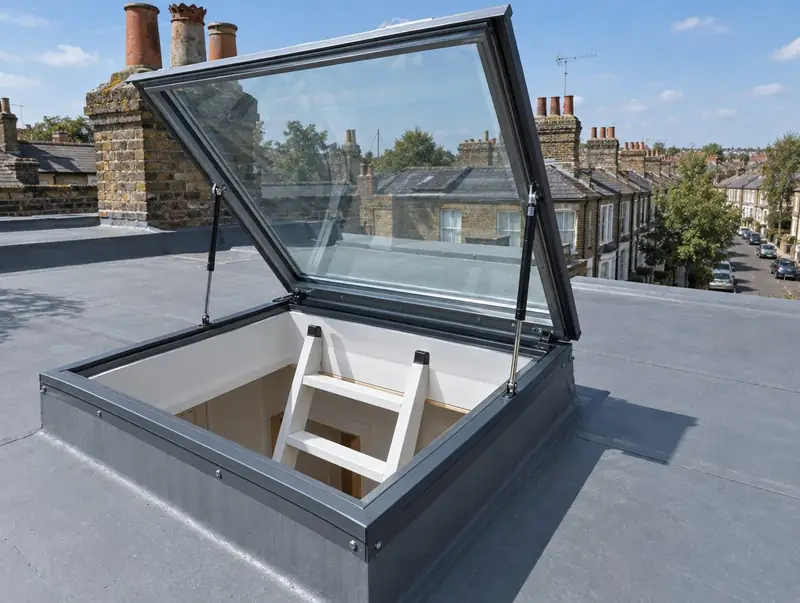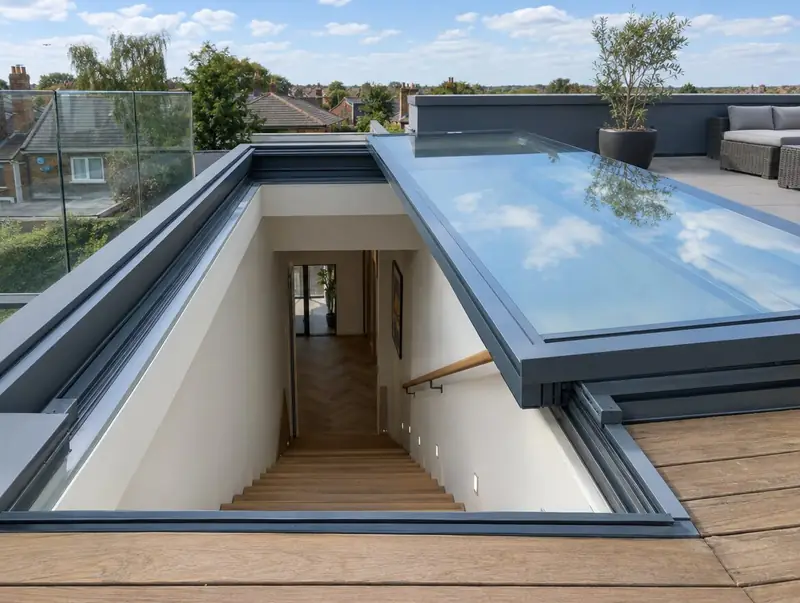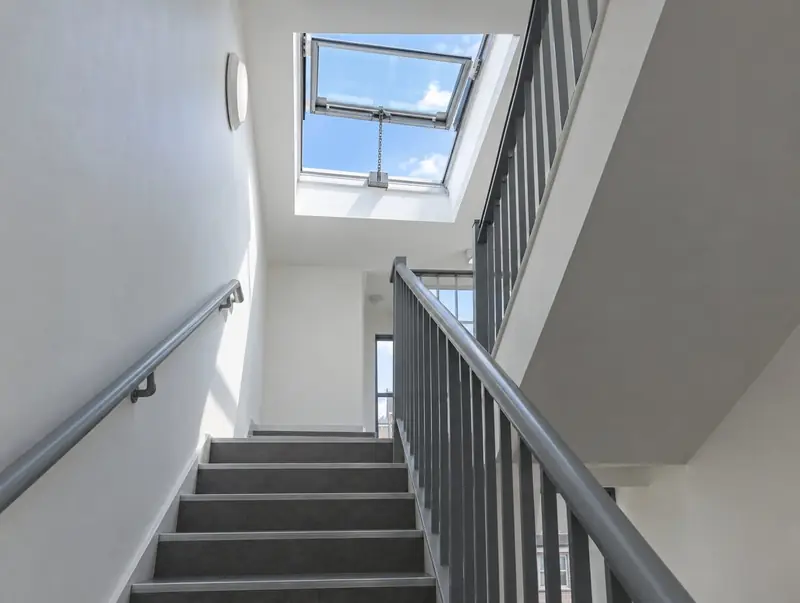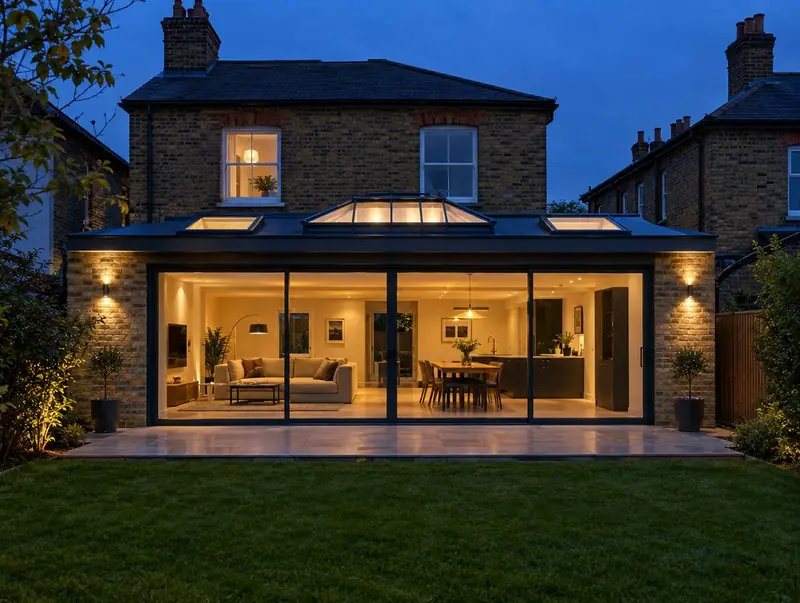
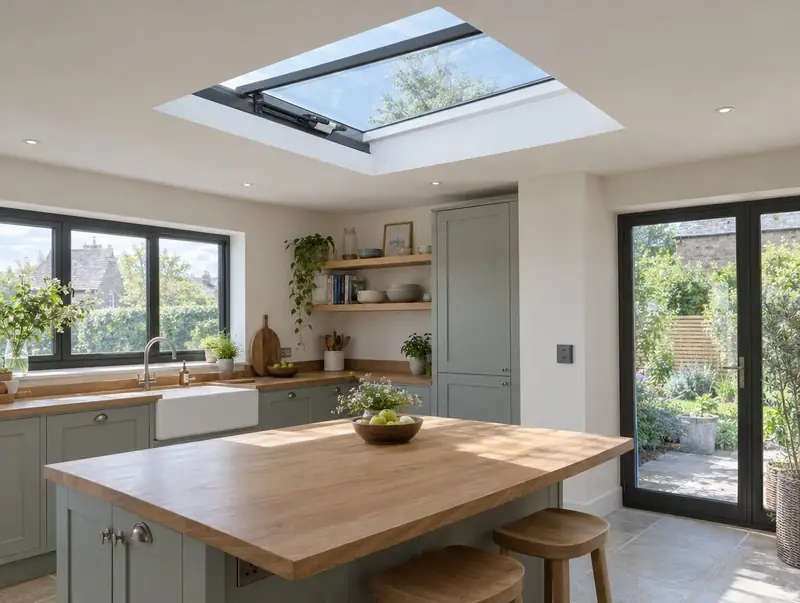
An opening rooflight lets warm, stale air out at the highest point of a room, which is why it suits kitchens, bathrooms and landings that get stuffy. Electric units do the opening for you on a switch or remote, and most close themselves when the rain sensor gets wet. Fitting one is a flat rooflight job with extra steps: the cable route, the controls and the electrical connection all have to be planned before the reveal is closed in.
We fit the rooflight, run the cable through the upstand or reveal, fix the switch or receiver and check that the actuator opens and closes smoothly before handing over. The final connection to the mains is made by a qualified electrician, either one we arrange for the job or your own, and that sits on the quote so there is no confusion on the day. We can supply an electric rooflight or fit one you have already bought.
What's included
- Upstand checked or built to suit the unit and its actuator housing
- Cable route planned through the kerb or reveal before the lining goes on
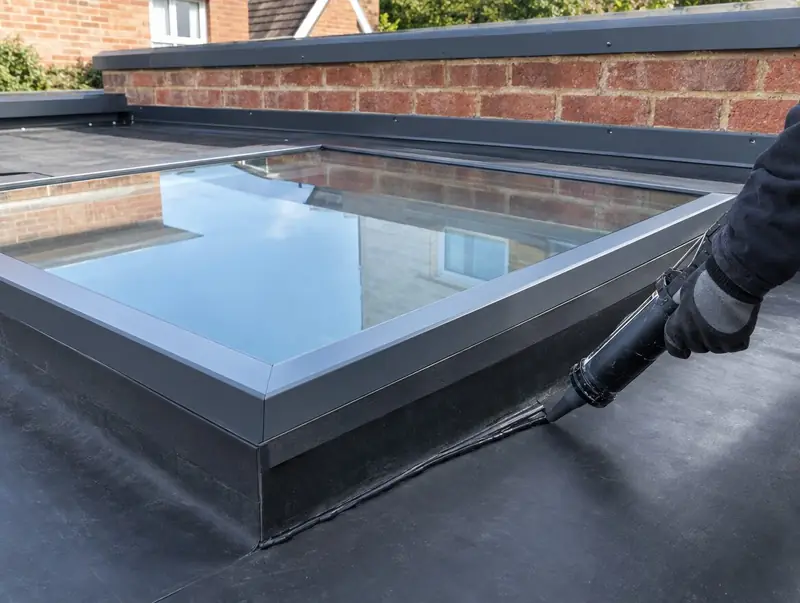
- Unit fitted, sealed and weathered like a fixed flat rooflight
- Rain sensor positioned where it will get wet when rain starts
- Wall switch, remote receiver or control box fixed in place
- Cable route and controls set up ready for the electrician's final connection, quoted as a separate line
- Opening and closing tested, with controls explained at handover
Guide prices
Small opening
Up to about 1000 × 1000 mm with actuator, rain sensor and switch or remote
Medium opening
Larger units, wall switch and remote
Large opening
Big or heavy units, extra actuators
Guide ranges for supply & fit; the electrician's final connection is quoted separately. Your price is fixed in a written quote after we have seen photos or surveyed. Scaffold, access towers or a crane are priced separately if the job needs them, and building control or building warrant fees, where a job needs them, are shown as their own line.
How we fit an electric opening rooflight
- Plan power and controlsWe agree where the switch or control box goes and where power will come from, so the cable route is settled before any lining is fixed.
- Prepare the upstandThe kerb is checked or built, with room for the actuator and a path for the cable that does not break the vapour control layer.
- Fit the rooflightThe unit is lifted, bedded and fixed like a fixed flat rooflight, then weathered into the roof covering around its frame.
- Route the cableCable is run from the unit to the control position. If it needs extending, that is done by a qualified electrician, as the makers require.
- Connect and set upThe electrician makes the final connection. We then set the controls, pair any remote and check the rain sensor closes the unit.
- Test and hand overThe rooflight is opened and closed through its full travel. You are shown the controls, the manual override if there is one and the warranty papers.
Things we check before quoting
Where power comes from
We find a sensible power supply for the rooflight before fitting day. One maker's guide asks for a standard 3-pin socket within 400 mm of the control box, so a ceiling void with no nearby circuit may need an electrician's visit first.
Cable length and size
We check the cable run against the maker's limits before planning where the controls go. Longer runs can need a thicker cable core, and one maker sets different minimum sizes for runs up to 10 m and from 10 m to 15 m.
Rain sensor position
We place the rain sensor where rain will reach it quickly and debris will not cover it. A sensor sheltered by a parapet or a nearby wall may not trigger in time, leaving the rooflight open during a shower.
Who makes the final connection
We confirm who will connect the rooflight to the mains before booking. The final connection must be made by a qualified electrician; we can arrange one, or work alongside yours, and the quote says which so nobody turns up expecting the other to do it.
Opening onto a side slope
We check where the opening part will sit if the roof is pitched or the unit faces a neighbour. In England, rooflights on a side-facing slope are only permitted development if they are obscure-glazed, and non-opening unless the opening part is more than 1.7 m above the floor.
Already bought an electric rooflight?
We fit electric rooflights bought online, from merchants or from makers. Send us the model and its wiring diagram, and say where you want the switch, so we can plan the cable route and the electrician's part. Check the delivery as soon as it arrives, including the actuator, sensor and control box; missing or damaged parts are for the seller to replace. The product warranty, including the motor, stays with the maker or seller. Our written guarantee covers the fitting, done to the maker's instructions.
Planning and building regulations
An electric rooflight follows the building regulations route of the job: approval for a new opening, or a controlled fitting if it replaces an old unit in a home in England or Wales, which means notifying building control; we are not registered with a competent person scheme, so we use a building notice and show the fee on the quote. The electrical work has rules of its own, which is why the final connection is made by a qualified electrician. As a rooflight in an existing home in England or Wales, it should still reach the 2.2 W/m²K limit.
| Nation | What usually applies |
|---|---|
| England | New openings usually need building regulations approval. Replacements are controlled fittings; we are not scheme-registered, so we notify them to building control and show the fee on the quote. Rooflights in existing homes must meet 2.2 W/m²K (roof windows 1.4 or WER Band B). Most house rooflights are permitted development if they project no more than 0.15 m; listed buildings need consent. |
| Wales | New openings generally need building regulations approval; replacements need a scheme installer's certificate or a building notice, and we use a building notice. Energy limits are 2.2 W/m²K for rooflights and 1.4 for roof windows. Rooflights aren't permitted development in conservation areas, National Parks, AONBs or World Heritage Sites. |
| Scotland | New rooflights need a building warrant. Replacing a rooflight complete with its frame doesn't, but must meet the standards, including 1.6 W/m²K. Householder permitted development rights don't apply in conservation areas; listed buildings need consent. |
| Northern Ireland | New openings alter the roof structure, so expect a building control application; confirm with your council. Rooflights in existing homes must meet WER Band C or 1.6 W/m²K. Permitted development (Class B) allows up to 15 cm on road-facing slopes, at least 0.5 m from ridge, eaves and verge; not in conservation areas or listed curtilage. |
A summary, not legal advice. We confirm what applies to your address before you commit. Read the full guide.
Questions about electric opening rooflight installation
Do I need an electrician as well?
Yes, for the final connection. We fit the rooflight, run the cable and set up the controls, and a qualified electrician makes the connection to the mains. We can arrange the electrician as part of the job or work with one you already use. Either way, the quote makes clear who is doing what.
What happens if it rains while it is open?
Most electric rooflights come with a rain sensor that closes the unit when it gets wet. The sensor needs to sit where rain will hit it, so we position it carefully. It is still sensible not to leave a rooflight wide open in stormy weather, and some systems let you set limits on how far it opens.
Can I convert my fixed rooflight to electric?
Not usually. A fixed rooflight has no hinge, actuator or opening seal, so it cannot simply be motorised. The answer is normally to replace it with an electric opening unit, which may fit the same kerb if the sizes match. We check the existing kerb and give you a replacement price.
Is there a manual override?
Many units have one, such as a manual release or a way to close the rooflight if the power fails, but it varies by product. We show you whatever your unit has at handover. If a manual override matters to you, for example over a stairwell, mention it when choosing the rooflight.
Can it run from solar power?
Some opening rooflights are made with a small solar panel and battery instead of a mains connection, which avoids running a cable. They suit rooms where a power supply is awkward, but they depend on enough daylight to keep the battery charged. If you are considering one, we can compare it with a mains unit for your roof.