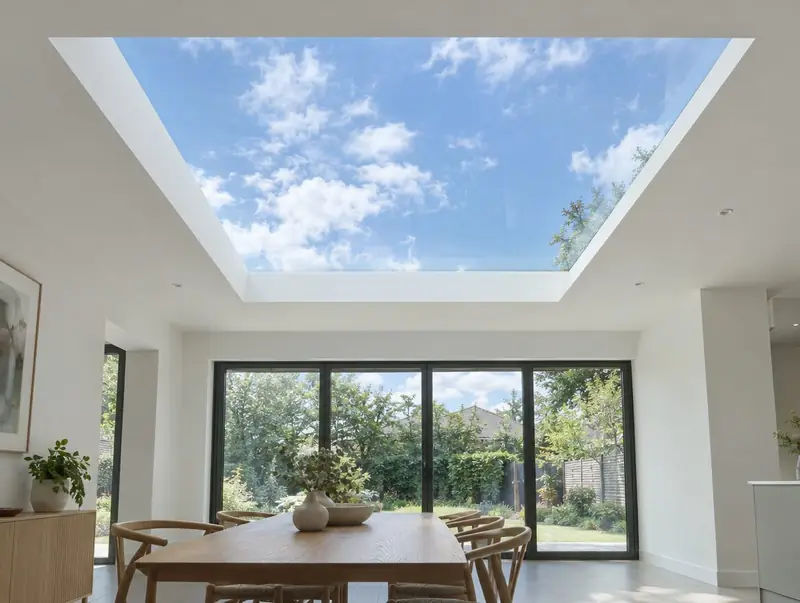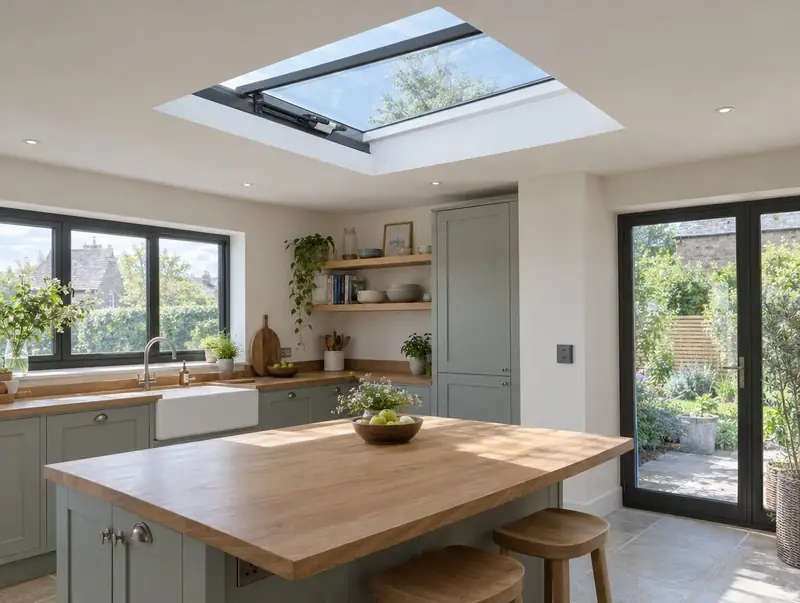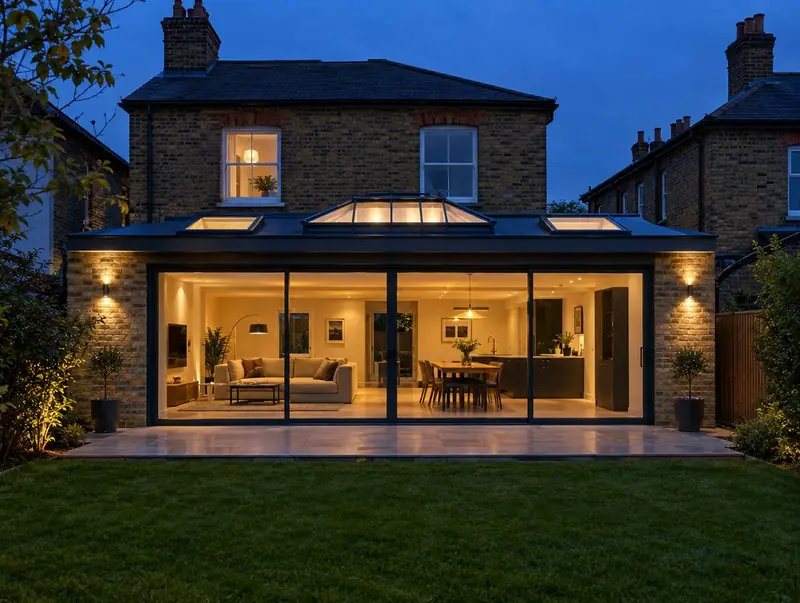
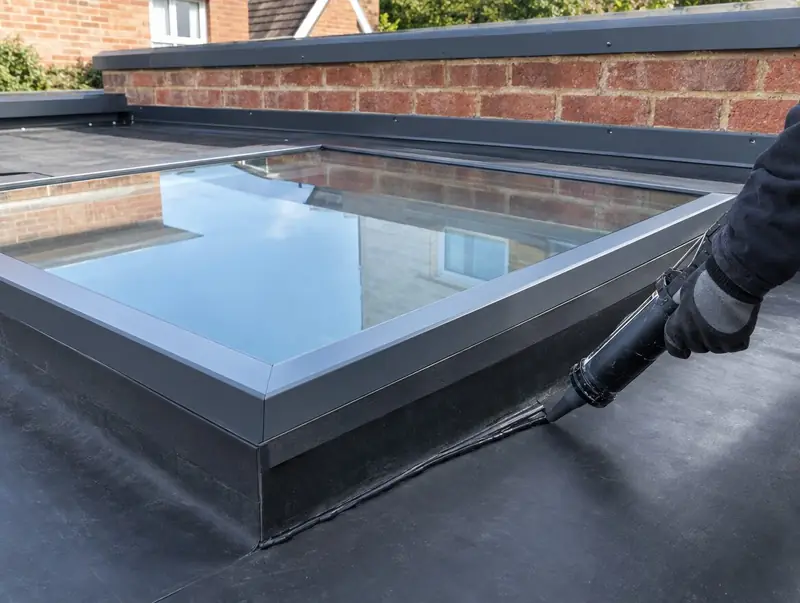
A fixed flat rooflight is the plainest way to get daylight into a flat-roofed room: a double or triple-glazed unit on a timber upstand, with nothing to open and very little to go wrong if it is fitted well. Most of the skill is in the bits around the glass. The upstand has to be the right size and height, the glass needs a slight fall so rain runs off, and the roof covering must be dressed up to the frame properly.
We fit flat rooflights on new extensions, onto existing kerbs where an old unit has been removed, and into new openings cut into an existing roof. Sizes run from small units over a hallway to large panes over a kitchen that need lifting gear on the day. If you have already chosen a rooflight, send the product details; if not, tell us the opening size and what you want from it, such as solar-control glass for a south-facing room, and we will suggest units to suit.
What's included
- Upstand checked or built to the maker's internal and external sizes
- Fall confirmed so rain runs off the glass rather than sitting on it
- Unit bedded on the specified sealant or tape and screw-fixed
- Membrane, felt or GRP finished to the frame the way the maker shows
- Lifting gear or extra hands arranged for large and heavy panes
- Reveal lined and trimmed inside, with the glass left clean
- Product paperwork handed over and warranty registration explained
Guide prices
Small fixed
Double-glazed fixed unit up to 1000 × 1000 mm, fitted to a ready upstand
Medium fixed
1000 × 1500 to 1000 × 2000 mm, double or triple glazed
Large fixed
Bigger units, solar-control glass, two-person lift or lifting gear
Guide ranges for supply & fit. Your price is fixed in a written quote after we have seen photos or surveyed. Scaffold, access towers or a crane are priced separately if the job needs them, and building control or building warrant fees, where a job needs them, are shown as their own line.
How we fit a flat rooflight
- Choose size and glassWe confirm the opening size, the glass make-up and any solar-control coating, then check the unit's drawing against the upstand it will sit on.
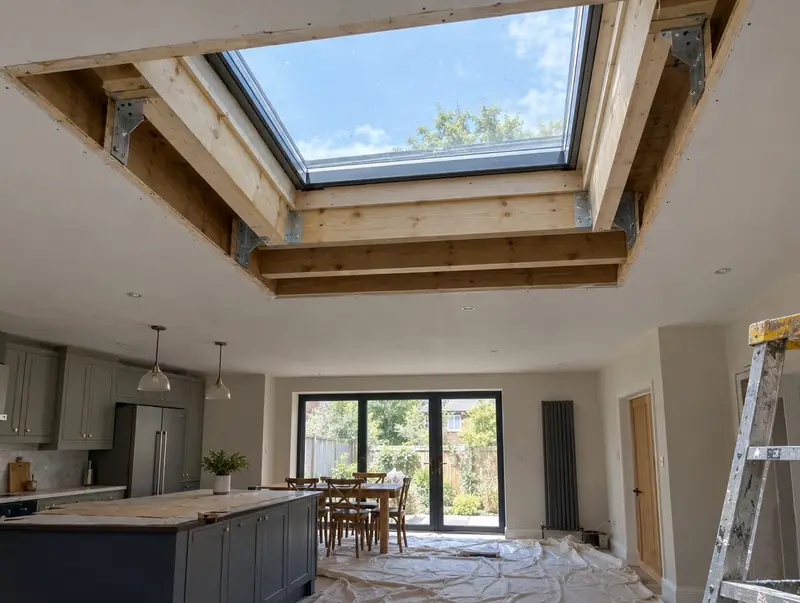
- Prepare the kerbAn existing kerb is checked for height, level and square. A new one is built, insulated and topped with the membrane before the glass arrives.
- Lift the unit upSmall units go up by hand with two people. Large panes are lifted with gear booked for the day, so the glass is never dragged across the roof.
- Bed and fixThe frame is bedded, centred on the kerb with an even gap all round and screwed at the spacings in the maker's guide, starting close to each corner.
- Weather it inThe roof covering is finished to the frame: EPDM tucked and sealed, felt warmed with a hot-air gun rather than a flame, GRP laminated up to the drip line.
- Finish insideReveal trims or boards are fitted, protective film is taken off the glass and the unit is cleaned before you are shown the paperwork.
Things we check before quoting
Pitch of the glass
We make sure the glass will sit at the pitch its maker asks for. Many flat glass units need around 5°, built into the upstand or the unit itself, so rain clears the glass, and a dead-flat unit can leave water and dirt sitting on it.
Solar gain on south-facing roofs
We ask which way the roof faces and how the room is used before suggesting glass. A large clear pane over a south-facing kitchen can make the room hot in summer, and solar-control glass is worth pricing at the start rather than regretting afterwards.
Weight of large panes
We check the weight of the unit against how we will get it onto the roof. Big double or triple-glazed panes can be beyond two people on a ladder, so we book lifting gear or extra hands in advance and show the cost on the quote.
Fixed or opening
We ask whether you need ventilation before you settle on a fixed unit. A fixed rooflight cannot be changed to open later, so if the room needs air or the rooflight is the only way to let heat out, an opening unit is worth comparing now.
Ceiling and reveal depth
We measure the depth from the kerb top to the ceiling to plan the reveal. Deep reveals in thick roofs need lining and sometimes splaying to spread the light, and that inside work is priced so it is not a surprise.
Bought a flat rooflight yourself?
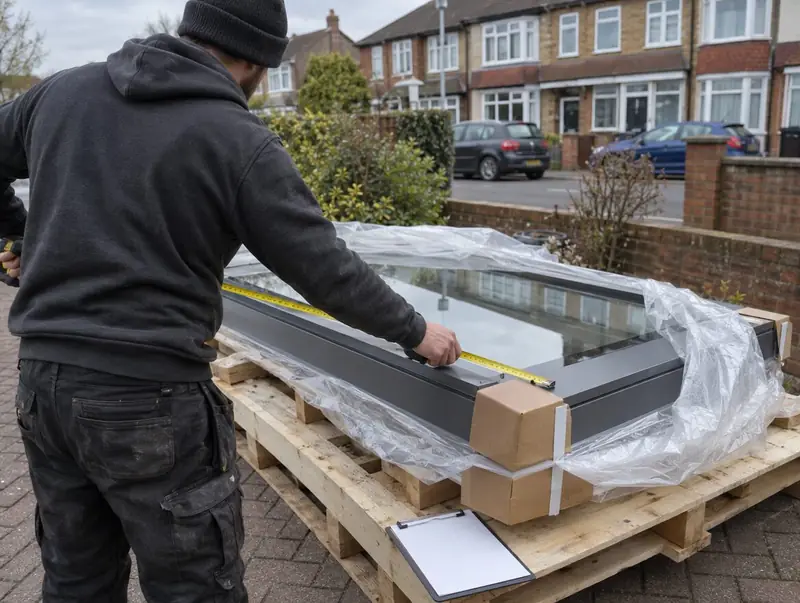
We fit flat rooflights bought online or from a merchant. Before booking, send the product name and the opening or kerb size, and we will check the two agree. When it arrives, open it and look it over; if there is transit damage, report it to the seller, because the replacement is theirs to arrange. On the day we check the unit again, then fit it exactly as the maker's instructions say. The maker or seller holds the product warranty, and our written guarantee covers the fitting.
Planning and building regulations
On a new extension, the rooflight is part of the extension's building regulations approval. A new rooflight cut into an existing roof generally needs approval of its own, or a warrant in Scotland. A replacement in a home in England or Wales is a controlled fitting, either self-certified through a competent person scheme or notified to building control. We are not registered with a scheme, so we notify replacements with a building notice and show the fee on the quote. Rooflights in existing homes in England and Wales should reach 2.2 W/m²K.
| Nation | What usually applies |
|---|---|
| England | New openings usually need building regulations approval. Replacements are controlled fittings; we are not scheme-registered, so we notify them to building control and show the fee on the quote. Rooflights in existing homes must meet 2.2 W/m²K (roof windows 1.4 or WER Band B). Most house rooflights are permitted development if they project no more than 0.15 m; listed buildings need consent. |
| Wales | New openings generally need building regulations approval; replacements need a scheme installer's certificate or a building notice, and we use a building notice. Energy limits are 2.2 W/m²K for rooflights and 1.4 for roof windows. Rooflights aren't permitted development in conservation areas, National Parks, AONBs or World Heritage Sites. |
| Scotland | New rooflights need a building warrant. Replacing a rooflight complete with its frame doesn't, but must meet the standards, including 1.6 W/m²K. Householder permitted development rights don't apply in conservation areas; listed buildings need consent. |
| Northern Ireland | New openings alter the roof structure, so expect a building control application; confirm with your council. Rooflights in existing homes must meet WER Band C or 1.6 W/m²K. Permitted development (Class B) allows up to 15 cm on road-facing slopes, at least 0.5 m from ridge, eaves and verge; not in conservation areas or listed curtilage. |
A summary, not legal advice. We confirm what applies to your address before you commit. Read the full guide.
Questions about flat rooflight installation
Does a flat rooflight need a fall?
Most flat glass rooflights do. The maker will state a minimum pitch, often around 5°, and it can be built into the upstand or come from the unit's own frame. Without it, rain sits on the glass, leaves dirt marks and puts more water against the seals. We confirm the requirement for your unit before the kerb is built.
Double or triple glazed?
Both can meet the energy limit for rooflights in existing homes, depending on the product, so we check the unit's published U-value. Triple glazing usually insulates better and quietens rain noise, but the units are heavier and thicker, so the upstand and lifting plan need to suit. We price both for the sizes you are considering.
Can you fit a flat rooflight on a GRP roof?
Yes. On a GRP roof the upstand is usually boarded and laminated, and the laminate is taken up under the rooflight's drip edge once the unit is in place, so the timing matters. If the roof is new, we work with the roofer so the upstand and the glass go in at the right stage.
How big can a flat rooflight be?
Single panes are made in large sizes, but the practical limit is often weight, access and the roof structure rather than the glass. Bigger panes may need lifting gear, a stronger opening and an engineer's check. For very large areas, two or more units side by side or a roof lantern can be easier to install.
Will it be noisy when it rains?
Glass is quieter under rain than a plastic dome, and a laminated or triple-glazed unit quieter still. Heavy rain will always be audible on a roof, but a well-fitted glass unit sounds more like a window than a drum. If noise matters, for a bedroom say, ask about the glass make-up before ordering.