Do you need planning permission for a rooflight?
For most houses, no, provided the rooflight stays close to the roof slope and below the ridge. Permitted development rights let householders add rooflights without an application within set limits. Those rights apply to houses, not flats or maisonettes, and they can be removed or restricted in protected places. The limits differ by nation, so start with the table below and confirm with your council for your address. We will tell you what usually applies to your job, but we cannot promise a planning outcome.
How do the planning rules compare across the UK?
| Nation | Projection and position | Conservation areas | Listed buildings | Side-facing slopes |
|---|---|---|---|---|
| England | No more than 0.15 m beyond the original roof slope, and not above the highest part of the roof | The roof alterations class has no conservation area exclusion, but an Article 4 direction can remove the rights | Listed building consent always needed to insert a rooflight | Obscure-glazed and non-opening unless the opening part is over 1.7 m above the floor |
| Wales | No more than 150 mm, and not above the highest part of the roof | Not permitted development in conservation areas, National Parks, AONBs or World Heritage Sites | Expect consent to be needed and confirm with your council | Within 10.5 m of a side boundary: obscure-glazed and non-opening |
| Scotland | Guidance does not name rooflights, so confirm the limits with the planning authority | Class 2B rights do not apply | Listed building consent needed | Confirm with the planning authority |
| Northern Ireland | No more than 15 cm beyond a slope facing a road, at least 0.5 m from ridge, eaves, party wall and verge, and not above the highest part of the roof | Not permitted development | Not permitted development within the curtilage; confirm consent with your council | Within 15 m of a boundary: obscure-glazed and non-opening unless over 1.7 m above the floor |
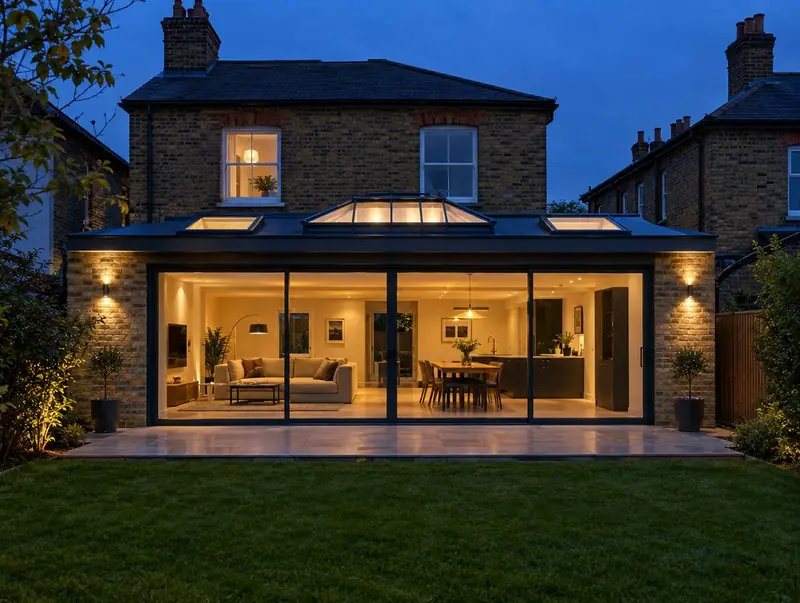
Lantern-style rooflights stand well above the roof plane, and one planning consultancy notes they are unlikely to fit within the 150 mm limit. A flat rooflight on a tall kerb can raise the same question, so ask before ordering.
Does a new rooflight need building regulations approval?
Yes, in almost every case. Cutting a new opening usually means cutting rafters or joists, adding trimmers and sometimes strengthening the timbers alongside. Building control will want to know the roof can carry the load, that the unit and kerb meet energy limits, and how fire performance is handled if the rooflight is near a boundary.
- England and Wales: government guidance says approval will generally be needed for a new rooflight. No competent person scheme covers new openings, so they go through building control.
- Scotland: new rooflights need a building warrant. The list of work not needing a warrant excludes alterations to the roof.
- Northern Ireland: structural alterations to roofs need a building control application. The guidance does not name rooflights, so confirm with your council.
What about replacing an existing rooflight?
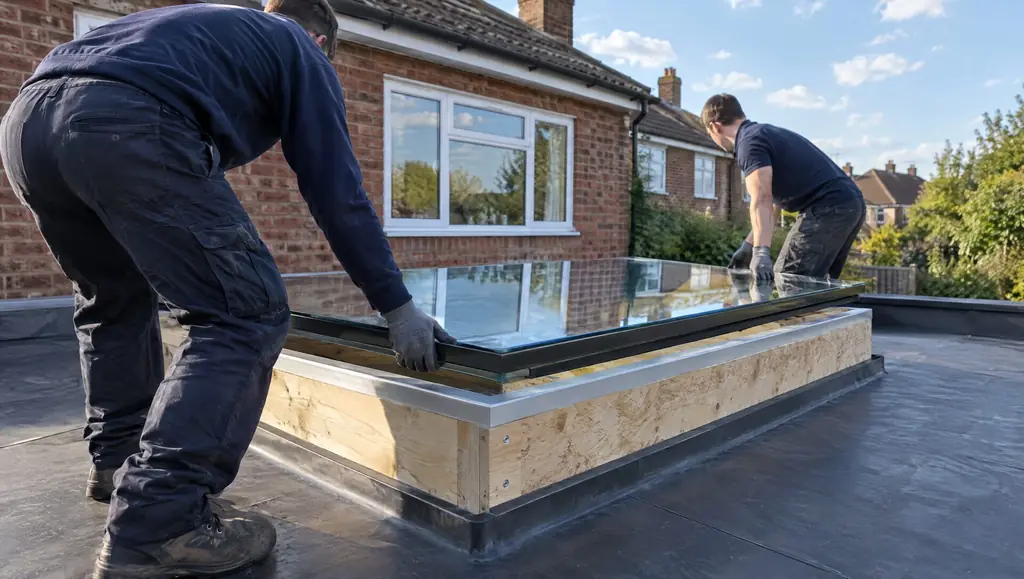
A replacement rooflight or roof window is a controlled fitting. It has to be fitted and draught-proofed properly and be no worse, in energy terms, than the one it replaces.
In England, a replacement needs building regulations approval unless it is done by an installer registered with a competent person scheme, who can self-certify the work. The schemes authorised for replacement rooflights and roof windows in existing dwellings are listed on GOV.UK, and you can check an installer's registration with the scheme itself. For buildings other than dwellings, the scheme route does not cover load-bearing or structural glass, which matters for walk-on units. Wales works the same way. Without a scheme installer, the work goes to the council as a building notice with a fee. As an example, one Welsh council's published fee for a building notice covering replacement windows, doors and rooflights is £270 inc VAT. Fees vary from council to council.
In Scotland, replacing a rooflight including its frame does not need a warrant, but it must meet the standards in full. Replacing only the glazing must leave it no worse than before. In Northern Ireland, one council's exemption list covers replacement windows in dwellings but does not mention roof windows, so confirm with your council.
We are not registered with a competent person scheme, so in England and Wales replacements we fit go to the council as a building notice, and our quote includes that fee. New openings go through building control (or a building warrant in Scotland), and that fee is on the quote too, so the paperwork is not a surprise.
What energy limits apply to a rooflight?
| Nation | Rooflight | Roof window | Coming changes |
|---|---|---|---|
| England, existing dwellings | 2.2 W/m²K | 1.4 W/m²K or WER Band B | ADL 2026 in force 24 March 2027, with these limits unchanged |
| Wales, existing dwellings | 2.2 W/m²K | 1.4 W/m²K or WER Band B | 2026 edition in force 4 March 2027; check its tables |
| Scotland, alterations | 1.6 W/m²K area-weighted average, 3.3 for any single unit | Same as rooflight | Check the current Technical Handbook |
| Northern Ireland, existing dwellings | WER Band C or 1.6 W/m²K | WER Band C or 1.6 W/m²K | Technical Booklet F1, 2022 |
England and Wales also set 0.35 W/m²K for a site-built upstand. Read spec sheets carefully: in England rooflights are assessed in the horizontal position and roof windows in the vertical, and the same unit gives a different figure in each position. Ask the maker for the declared value in the position that applies.
Do fire rules affect where a rooflight can go?
Sometimes. Building control considers the fire performance of a rooflight that is close to a boundary. Some plastic rooflights have to be kept a set distance from the relevant boundary, while glass and certain plastics are treated more favourably. The tables behind those rules have been revised over the years, so ask building control to confirm what the current edition requires for your unit and position.
Two other cases come up on flats and larger houses. Rooflights in a protected stairway, or within 3 m of an escape route across a flat roof, need fire resistance. Smoke vents at the top of common stairs are a separate subject, covered in our smoke vent and AOV guide.
What about safety glass and walk-on units?
Approved Document K expects glazing that people could come into contact with to break safely, and toughened or laminated glass is the usual answer for rooflights. A walk-on rooflight is a structural element. It needs structural calculations, and its loading should be checked against BS EN 1991-1-1. One maker advises avoiding units rated only to the withdrawn BS 6399-1. A unit described as non-fragile is not necessarily walkable, because non-fragile only means it should not give way if someone falls onto it.
How do we deal with permissions on your job?
At survey, or from your photos, we note the building type, the nation, whether the property is in a conservation area or listed, and whether the job is a new opening or a replacement. Your quote then sets out what usually applies and any building control or warrant fee. We are not registered with a competent person scheme, so replacements we fit in England and Wales go through a building notice. Planning applications and listed building consent are made by the owner or their agent; we can supply product details and a description of the fitting method for them. Start with the quote form, or read about new rooflight openings, replacements and conservation areas and listed buildings.
Questions
Does a flat roof rooflight need planning permission?
On a house it is often permitted development, but the limit is measured from the roof plane, and a tall kerb plus the unit can exceed it. One planning consultancy notes lantern-style rooflights are unlikely to comply. In protected areas or on flats the position changes. If in doubt, ask the council for a view in writing before ordering.
Do I need building control to replace a rooflight?
In England and Wales, yes, unless the installer is registered with a competent person scheme that self-certifies replacements. Otherwise a building notice goes to the council, with a fee. In Scotland, a replacement with its frame needs no warrant but must meet the standards in full. In Northern Ireland, confirm with your council.
Will the 2026 energy rules change what I can fit?
For existing homes in England, ADL 2026 keeps the same limits for rooflights and roof windows when it comes into force on 24 March 2027. Wales has a new edition taking effect on 4 March 2027, so check its tables for your job. If work will start close to either date, ask building control which edition applies.