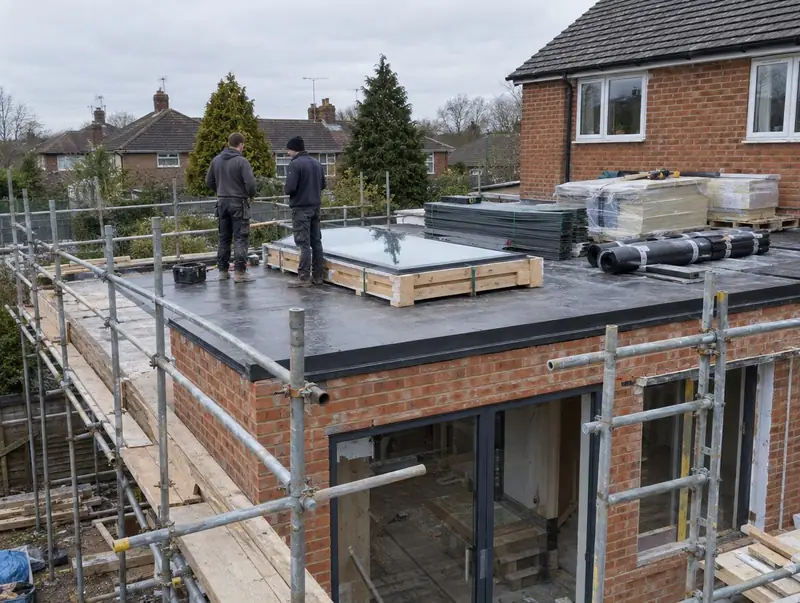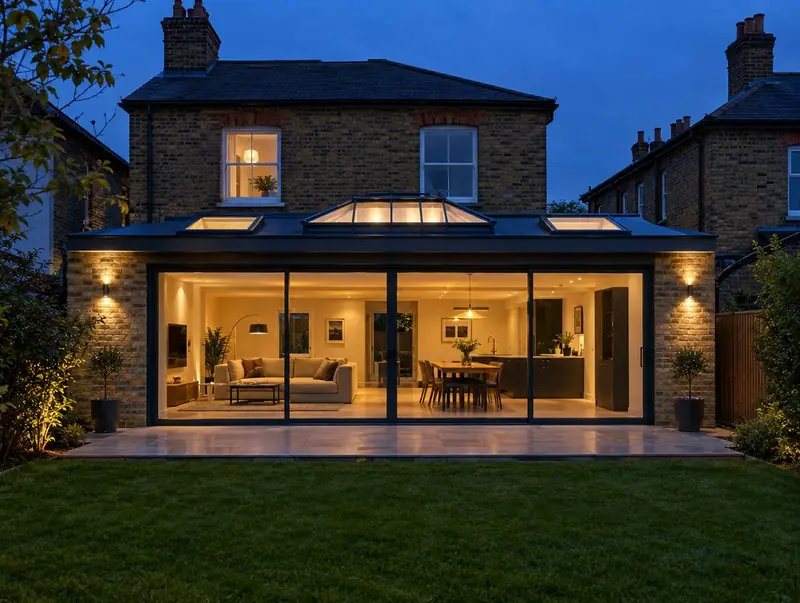
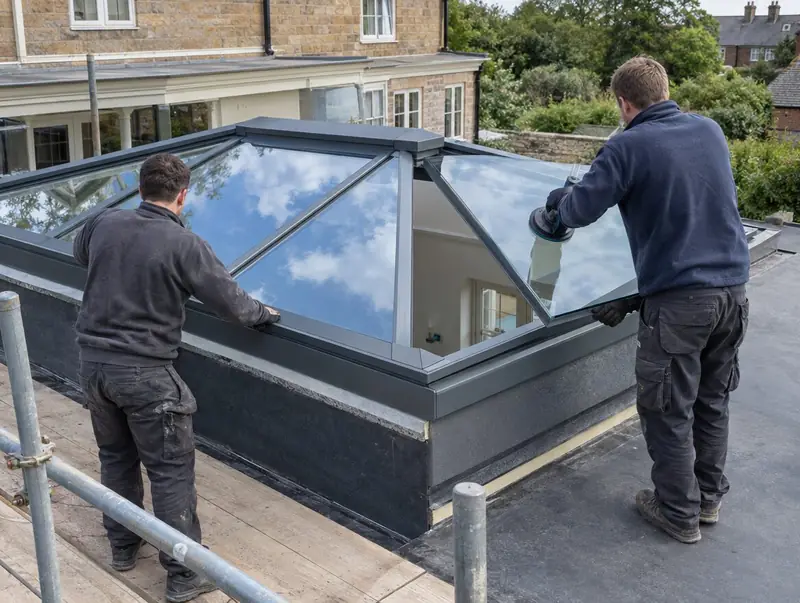
A roof lantern arrives as a kit: ridge, hips, rafters or bars, glass and caps, plus a long set of instructions. It is built on the roof, on an upstand that has to be the right size, level and strong enough for the weight of the glass. Small lanterns can be built and glazed in under a day by two people; larger ones need longer, and the biggest need lifting gear for the glass.
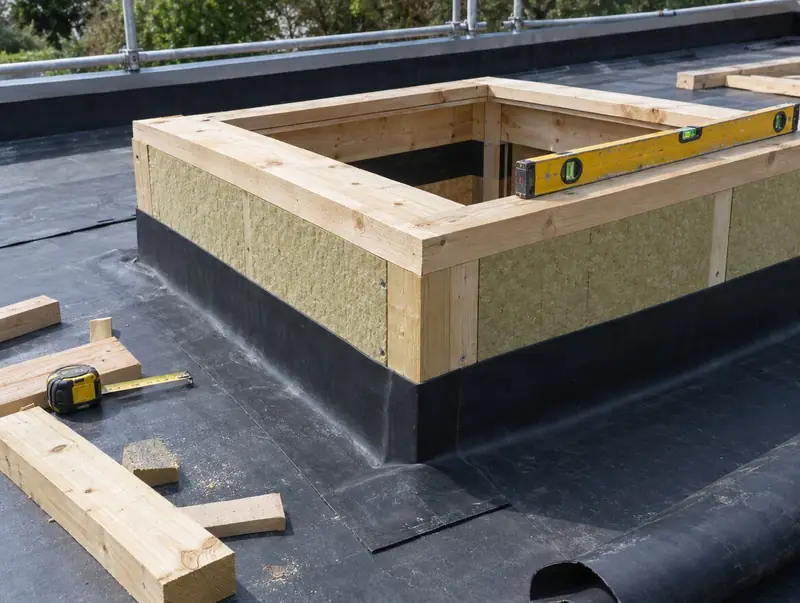
Lanterns are less forgiving of a poor upstand than most flat rooflights. Many makers want the kerb built level, not to a fall, and allow it to be only slightly oversize. If yours is out, the lantern will not square up and the glass will not sit evenly. So we check the kerb first, then build the frame in the order the maker sets, because some warranties depend on it. We supply aluminium lanterns and fit lanterns customers have bought themselves.
What's included
- Upstand checked for size, level and square before the kit is opened
- Frame assembled on the kerb in the maker's set order
- Glass lifted and laid into the frame by hand or with gear
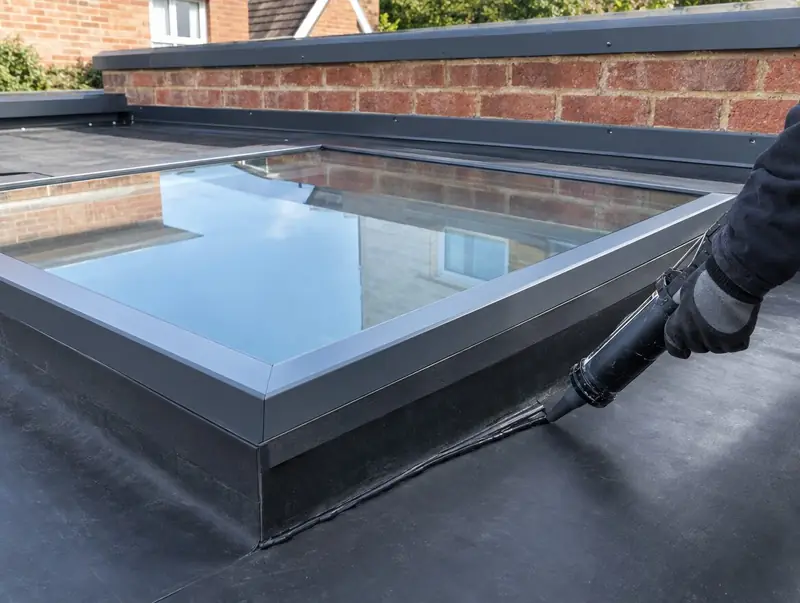
- Caps, end closures and ridge trims fitted and sealed
- Roof membrane checked where it meets the lantern frame
- Internal trims fitted to the ring beam or upstand
- Glass cleaned and packaging cleared from the roof
Guide prices
About 1 × 2 m
Aluminium lantern, double glazed, fitted and glazed on a ready upstand
About 1.5 × 3 m
Mid-size lantern, solar-control glass options
2 × 4 m and over
Large lanterns, lifting gear on the day
Guide ranges for supply & fit. Your price is fixed in a written quote after we have seen photos or surveyed. Scaffold, access towers or a crane are priced separately if the job needs them, and building control or building warrant fees, where a job needs them, are shown as their own line.
How we fit a roof lantern
- Check the kerbThe upstand is measured against the lantern's nominal size, checked level and square, and its height above the finished roof confirmed.
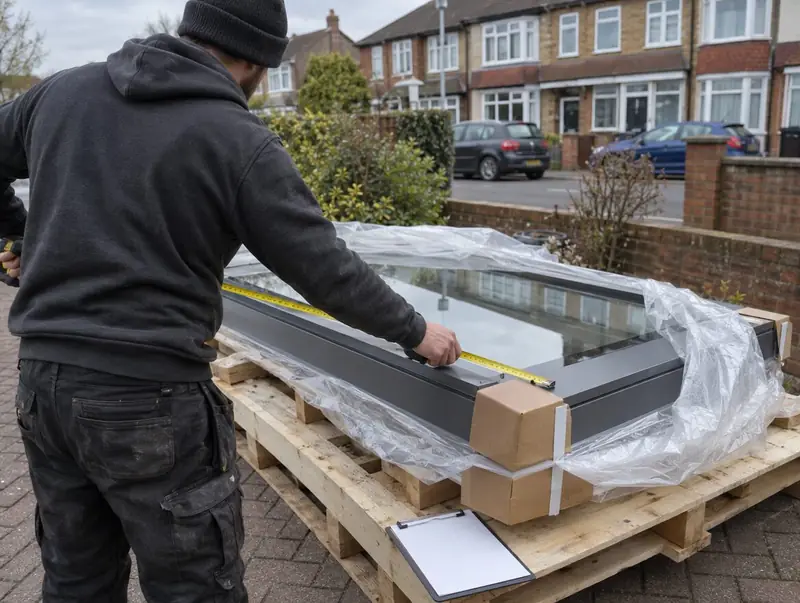
- Unpack and sortThe kit is unpacked on the ground, checked against the parts list and laid out so each piece goes up in the order the instructions need.
- Build the frameThe ring beam, ridge, hips and bars are assembled and fixed to the kerb, without overtightening or using impact drivers on the aluminium.
- Glaze the lanternGlass panels go in one by one, from the order the maker sets, onto their seals or tapes. Larger panes are lifted with suction gear.
- Cap and sealTop caps, end closures and trims are fitted and sealed, then the joint between frame and roof covering is checked all the way round.
- Finish insideInternal trims or plasterboard are fitted around the opening, the glass is cleaned and you get the maker's paperwork and care notes.
Things we check before quoting
Upstand size and tolerance
We check the kerb against the lantern maker's figures before the kit is opened. One maker asks for the external upstand to match the nominal lantern size within 20 mm over and nothing under, so a kerb built a little small will not take the lantern at all.
Level, not to a fall
We set or check the kerb level unless your lantern's maker says otherwise. Many lanterns are designed to sit on a level upstand, and some tolerate only a few degrees of fall, unlike flat glass rooflights that usually need one.
Following the build order
We assemble lanterns in exactly the sequence the instructions give. At least one maker warns that the warranty may be invalidated if the instructions are not followed in the correct order, so short cuts on site are not worth the risk.
Lanterns and planning
We check whether your lantern can go in without a planning application. A lantern projects further above the roof than a flat rooflight, so whether permitted development applies depends on the roof and on which nation you live in.
Heat and glare
We talk through the glass options before you order a large lantern. Lanterns let in a lot of sky, and over a south-facing kitchen solar-control glass can help with summer heat and glare, which is easier to choose now than to change later.
Bought a roof lantern online?
Lanterns are one of the most common things people buy online and then need fitted. Send us the product name, size and installation guide, plus photos of the upstand, and we will check it before booking. Open the delivery promptly, check the glass and parts list, and report any damage or missing pieces to the seller. On the day we build the lantern as the maker's instructions set out. Warranty for the lantern itself stays with its maker or seller, and our written guarantee covers the build and fitting.
Planning and building regulations
On a new extension, the lantern is part of the extension's building regulations approval. Cutting a new lantern opening into an existing roof generally needs approval of its own, or a warrant in Scotland, covering the structure and energy performance. Planning is the bigger question: a lantern stands taller than a flat rooflight, so whether it is permitted development depends on your roof and your nation, and listed buildings need consent. We check both for your address and include any fees on the quote.
| Nation | What usually applies |
|---|---|
| England | New openings usually need building regulations approval. Replacements are controlled fittings; we are not scheme-registered, so we notify them to building control and show the fee on the quote. Rooflights in existing homes must meet 2.2 W/m²K (roof windows 1.4 or WER Band B). Most house rooflights are permitted development if they project no more than 0.15 m; listed buildings need consent. |
| Wales | New openings generally need building regulations approval; replacements need a scheme installer's certificate or a building notice, and we use a building notice. Energy limits are 2.2 W/m²K for rooflights and 1.4 for roof windows. Rooflights aren't permitted development in conservation areas, National Parks, AONBs or World Heritage Sites. |
| Scotland | New rooflights need a building warrant. Replacing a rooflight complete with its frame doesn't, but must meet the standards, including 1.6 W/m²K. Householder permitted development rights don't apply in conservation areas; listed buildings need consent. |
| Northern Ireland | New openings alter the roof structure, so expect a building control application; confirm with your council. Rooflights in existing homes must meet WER Band C or 1.6 W/m²K. Permitted development (Class B) allows up to 15 cm on road-facing slopes, at least 0.5 m from ridge, eaves and verge; not in conservation areas or listed curtilage. |
A summary, not legal advice. We confirm what applies to your address before you commit. Read the full guide.
Questions about roof lantern installation
Can you fit a roof lantern I bought online?
Yes. Send us the product details, size and installation guide, and photos of the upstand, and we will confirm it suits the kerb before quoting. If the upstand needs building or correcting, we price that separately. We check the delivery on the day and build the lantern to the maker's instructions.
Does a lantern need planning permission?
Sometimes. Lanterns stand higher above the roof than a flat rooflight, so they may not fit within the permitted development limits for rooflights, depending on the roof and the nation. On a new extension the lantern is often covered by the extension's own permission. We check for your address before you order.
How long does it take to fit a lantern?
On a ready, level upstand, a small or mid-size aluminium lantern is often built and glazed in a day by two fitters. Large lanterns, heavy glass or upstand work can take longer. The weather matters too, since lantern glass is not lifted in high wind or rain.
Do I need a ring beam or kerb adaptor?
Some lanterns sit directly on a timber upstand, while others use a ring beam or adaptor that the frame fixes to. It depends on the product. We follow the maker's design and check the upstand will take whatever base the lantern uses before the kit is opened.
Can you replace an old roof lantern?
Yes. We take out the old lantern, check the kerb and either reuse it or build a new one, then fit the new lantern. Old kerbs are often the wrong size for a modern lantern, so the replacement may need a new upstand. We look at this at the survey and price it clearly.