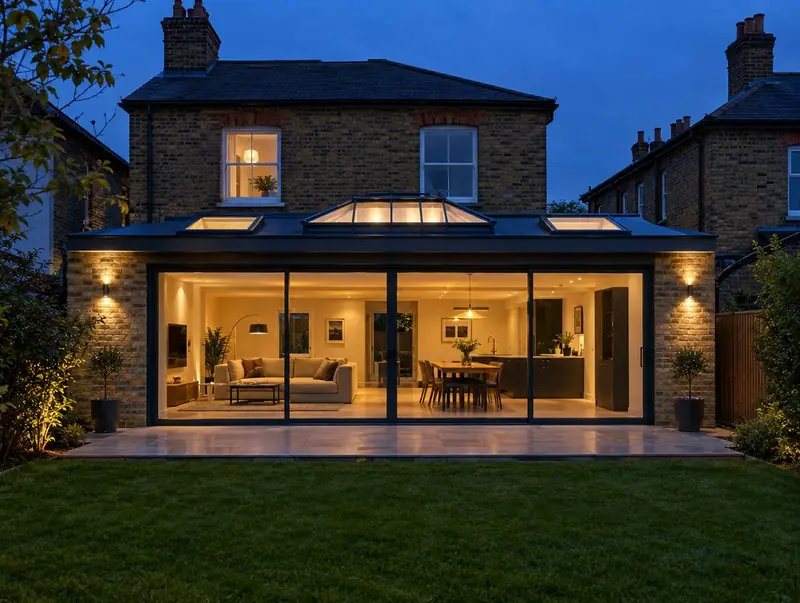
Guide prices in Tyne and Wear
Small fixed
Double-glazed fixed unit up to 1000 × 1000 mm, fitted to a ready upstand
Medium fixed
1000 × 1500 to 1000 × 2000 mm, double or triple glazed
Large fixed
Bigger units, solar-control glass, two-person lift or lifting gear
Guide ranges for supply & fit. Your price is fixed in a written quote after we have seen photos or surveyed. Scaffold, access towers or a crane are priced separately if the job needs them, and building control fees, where a job needs them, are shown as their own line.
Towns we list in Tyne and Wear
Fitting across Tyne and Wear means planning routes, access and lifting as well as the roof itself. Narrow lanes, shared driveways and town-centre parking restrictions all affect how a large unit is delivered and raised to roof level. We ask about these early so the quote reflects them. That approach is the same everywhere we work in England, from single domestic jobs to multi-unit commercial sites.
- Flat rooflights in Blaydon-on-Tyne
- Flat rooflights in Felling
- Flat rooflights in Gateshead
- Flat rooflights in Gosforth
- Flat rooflights in Hebburn
- Flat rooflights in Houghton-Le-Spring
- Flat rooflights in Jarrow
- Flat rooflights in Newburn
- Flat rooflights in Newcastle upon Tyne
- Flat rooflights in North Shields
- Flat rooflights in South Shields
- Flat rooflights in Sunderland
- Flat rooflights in Tynemouth
- Flat rooflights in Wallsend
- Flat rooflights in Washington
- Flat rooflights in Whickham
- Flat rooflights in Whitley Bay
What's included
- Reveal lined and trimmed inside, with the glass left clean
- Fall confirmed so rain runs off the glass rather than sitting on it
- Membrane, felt or GRP finished to the frame the way the maker shows
- Ceiling and reveal depth — We measure the depth from the kerb top to the ceiling to plan the reveal.
- Solar gain on south-facing roofs — We ask which way the roof faces and how the room is used before suggesting glass.
Rules that apply in England
Replacing a rooflight in an English home is a controlled fitting: it has to be self-certified by a scheme-registered installer or notified to building control. We are not registered with a competent person scheme, so replacements we fit are notified with a building notice, and the new unit has to meet current energy limits. Adding a new one usually means a building regulations application, because joists or rafters are trimmed. On the planning side, most house rooflights are permitted development if they project 0.15 m or less; on a side slope the glass must be obscured and fixed unless the opening part is over 1.7 m above the floor.
Common questions in Tyne and Wear
What upstand height and roof pitch does flat rooflight fitting need?
It depends on the product. Manufacturers usually specify a minimum upstand height above the finished roof surface, and a minimum pitch on the glass so rain runs off. We follow the maker's figures for your unit rather than a rule of thumb. If your existing kerb or roof falls short, we explain the options, such as raising the upstand or choosing a unit with built-in pitch.
Do I need planning permission for a rooflight in Tyne and Wear?
Often not. Many rooflights fall under permitted development, provided they do not project beyond the national limit and meet the other conditions that apply in England. Conservation areas, listed buildings and some flats are different and may need consent. Because the rules depend on the property, we confirm what is likely to apply at your address and point you to the planning authority where an application is needed.
Can you fit a rooflight in winter or when it is raining?
Yes, within limits. Cold is less of a problem than wet, because membranes, primers and sealants need a dry surface to bond. We plan fitting days around the forecast and may move a date if heavy rain is due. If the roof has to be opened up, it is not left overnight without a temporary weather seal, so the room below stays dry while the work is finished.