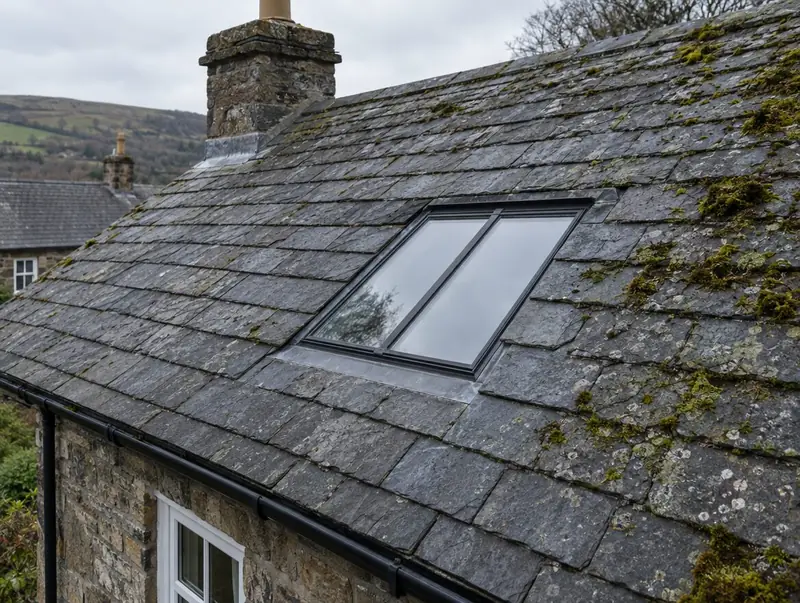
A conservation rooflight is designed to look like the cast-iron rooflights found on older roofs: a slim frame, often a glazing bar down the middle, and a profile that sits close to the line of the slates or tiles rather than standing proud. Councils often expect this style on listed buildings and in conservation areas, and many owners of period houses choose it anyway. Fitting it well means keeping that flush look while still making the roof watertight.
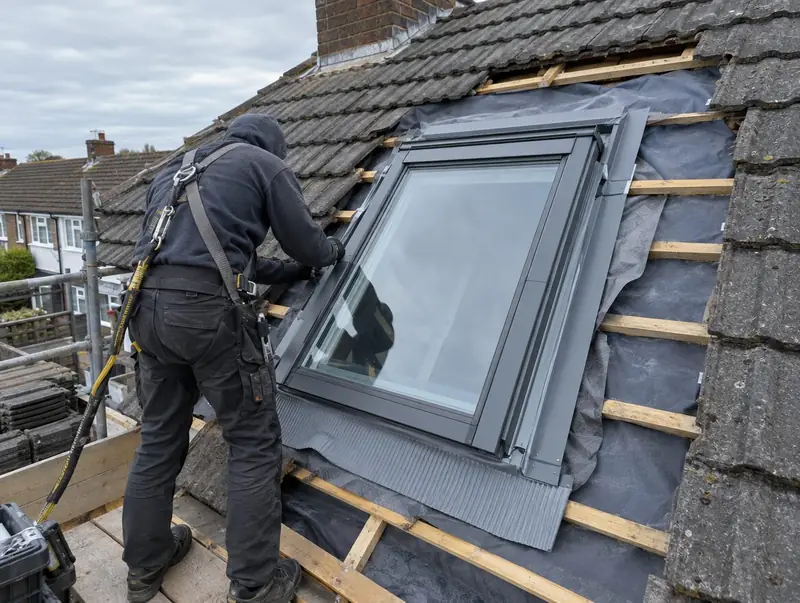
Older roofs are rarely straight. Rafters vary, slates are laid in diminishing courses and lead work may need to be dressed by hand. We set the rooflight to sit low in the roof, use flashings that suit the covering, and make good with matching slates or tiles where they can be reused. On listed buildings, consent comes first, and we will not cut into a listed roof until it is granted. We supply conservation rooflights or fit one you have already chosen.
What's included
- Position checked against any consent drawings or council conditions
- Slates or tiles lifted carefully and kept for reuse where possible
- Rafters trimmed with timbers that suit the existing roof
- Rooflight set low so it sits close to the line of the roof
- Flashings in lead or a matching kit, dressed to the covering
- Slates or tiles made good around the frame with tidy cuts
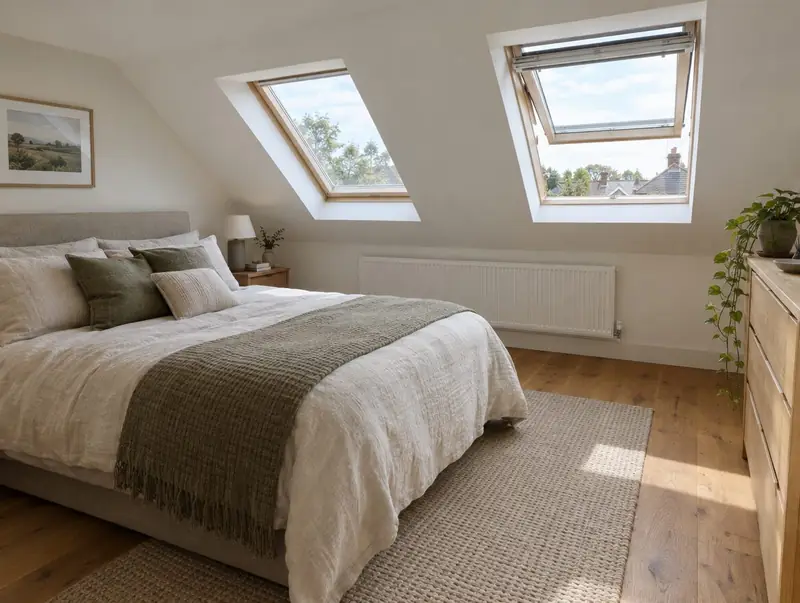
- Inside lining fitted to suit the room's ceiling or exposed rafters
Guide prices
Small conservation unit
Low-profile unit with glazing bar, slate or tile flashing
Medium unit
Larger opening, lead or matching flashings
Large or bespoke
Larger or made-to-order units for listed or sensitive roofs
Guide ranges for supply & fit. Your price is fixed in a written quote after we have seen photos or surveyed. Scaffold, access towers or a crane are priced separately if the job needs them, and building control or building warrant fees, where a job needs them, are shown as their own line.
How we fit a conservation rooflight
- Confirm the permissionsWe check whether the building is listed or in a conservation area and what the council expects. On listed buildings consent is needed before anything is ordered.
- Choose the unitWe match the rooflight size and style to the roof and the consent, including glazing bars and frame colour if the council has specified them.
- Lift the coveringSlates or tiles around the position are lifted by hand and kept, so as many as possible go back on the roof afterwards.
- Trim and set lowRafters are trimmed and the frame set so it sits low in the slope, with the glazing kept close to the plane of the roof.
- Flash and make goodLead or matching flashings are fitted and dressed, then the slates or tiles are refixed around the frame to keep the roof's lines.
- Finish insideThe lining is fitted to suit the room, whether it is a plastered ceiling, exposed rafters or a lime-plastered reveal, and the glass is cleaned.
Things we check before quoting
Listed building consent
We confirm listed building consent is in place before fitting any rooflight on a listed building. Consent is needed to insert a rooflight in a listed building, and some councils expect conservation-style flush units and will not accept them on front slopes.
Conservation area rules by nation
We check the permitted development position for your nation before the rooflight is ordered. Rooflights are not permitted development in Welsh conservation areas, and Northern Ireland excludes conservation areas too, while in England Class C rights can still apply unless an Article 4 direction removes them.
Reusing the original covering
We plan to reuse the existing slates or tiles wherever we can. Old slates and handmade tiles can be hard to match, so they are lifted carefully, stored and refixed, and any shortfall is made up with the closest match we can source.
Glazing bar and frame detail
We check whether the council has asked for particular details, such as a central glazing bar or a dark frame colour. Some conservation rooflights are made with these options, and fitting a unit that does not match the consent can cause problems later.
Energy and old roofs
We make sure the rooflight meets current energy rules while suiting an older roof build-up. A conservation unit still needs to meet the limit for its type, and the lining and insulation around it are planned so they do not trap moisture in an older, breathable roof.
Fitting a conservation rooflight you have bought
Conservation rooflights are often chosen and bought by the owner, sometimes to match a consent. We fit them. Send us the product details and any consent drawings or conditions, so we can check the unit and flashing suit the roof and the council's requirements. Check the delivery on arrival and report damage to the seller. On the day we fit it to the maker's instructions and the consent. Warranty on the rooflight itself remains with its maker or seller, while our written guarantee covers the fitting work.
Planning and building regulations
On listed buildings, listed building consent is needed to insert a rooflight, and changing an existing one may need consent too. In conservation areas the rules vary: rooflights are not permitted development in Welsh conservation areas, Northern Ireland excludes them, Scotland has no Class 2B rights there, and in England Article 4 directions can remove the usual rights. Building regulations still apply, as a new opening or a controlled fitting. We check which permissions your roof needs before quoting.
| Nation | What usually applies |
|---|---|
| England | New openings usually need building regulations approval. Replacements are controlled fittings; we are not scheme-registered, so we notify them to building control and show the fee on the quote. Rooflights in existing homes must meet 2.2 W/m²K (roof windows 1.4 or WER Band B). Most house rooflights are permitted development if they project no more than 0.15 m; listed buildings need consent. |
| Wales | New openings generally need building regulations approval; replacements need a scheme installer's certificate or a building notice, and we use a building notice. Energy limits are 2.2 W/m²K for rooflights and 1.4 for roof windows. Rooflights aren't permitted development in conservation areas, National Parks, AONBs or World Heritage Sites. |
| Scotland | New rooflights need a building warrant. Replacing a rooflight complete with its frame doesn't, but must meet the standards, including 1.6 W/m²K. Householder permitted development rights don't apply in conservation areas; listed buildings need consent. |
| Northern Ireland | New openings alter the roof structure, so expect a building control application; confirm with your council. Rooflights in existing homes must meet WER Band C or 1.6 W/m²K. Permitted development (Class B) allows up to 15 cm on road-facing slopes, at least 0.5 m from ridge, eaves and verge; not in conservation areas or listed curtilage. |
A summary, not legal advice. We confirm what applies to your address before you commit. Read the full guide.
Questions about conservation rooflight installation
Do I need permission for a conservation rooflight?
It depends on the building and where it is. On a listed building, consent is needed to insert a rooflight. In a conservation area, the rules differ by nation and some councils have Article 4 directions. Building regulations approval may also be needed. We check what applies before you order anything.
Will a conservation rooflight look right on my roof?
That is what they are designed for. They sit low in the roof with a slim frame and often a central glazing bar, much like the old cast-iron rooflights. The fitting matters too: setting it low, keeping the slate or tile courses tidy and dressing the flashings neatly is what makes it look original.
Can you reuse my old slates?
Usually, yes. We lift slates or tiles carefully and refix as many as possible around the rooflight. Old slates sometimes break when lifted, and handmade tiles can be hard to match, so we source the closest match for any shortfall. We will tell you before starting if your roof is likely to need more.
Can you replace an old cast-iron rooflight?
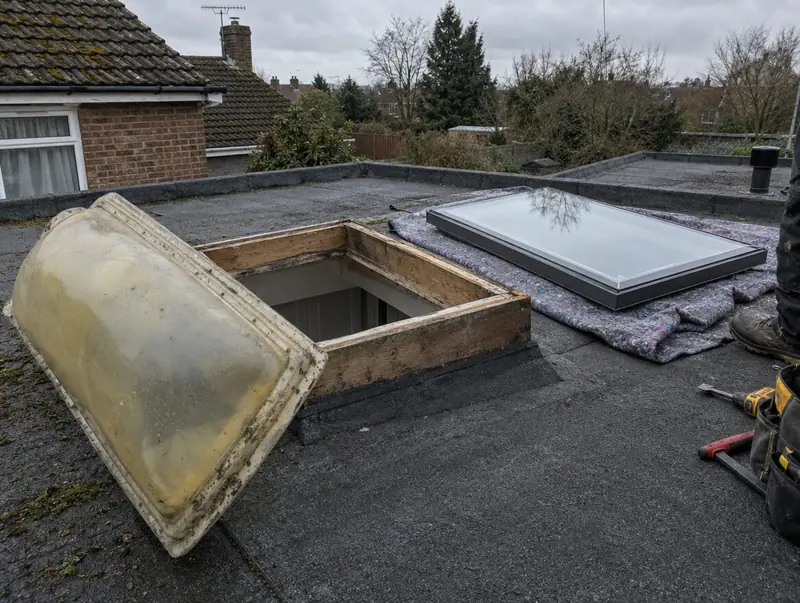
Yes. Old cast-iron rooflights often leak, rust or have single glass. A conservation rooflight of a similar size and look can usually replace it, with modern double glazing and better seals. On a listed building, check with the council first, as replacing historic fabric can itself need consent.
Are conservation rooflights double glazed?
Most modern ones are, and many are available with laminated inner glass. They are made to meet current energy rules while keeping a slim, traditional look. Some makers offer heritage-style glazing bars that do not split the glass. We can show you what different options look like from inside and out.