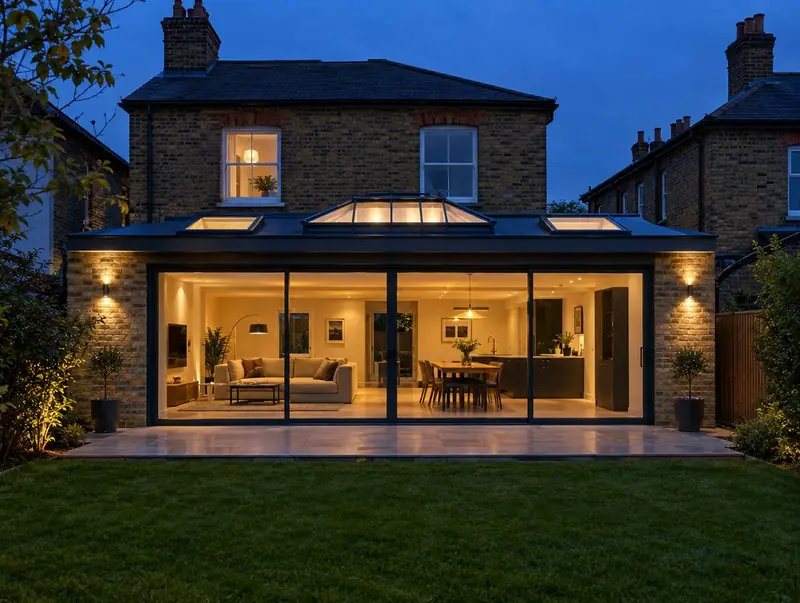
Fitting jobs in Hampstead
Fitting & replacement
- Fit-only rooflight installation · from £445
- Rooflight replacement · from £1,095
- New rooflight in an existing roof · from £2,295
- Rooflight upstands & kerbs · from £245
- Rooflight glass replacement · from £445
- Rooflight leak repairs · from £145
Flat roof rooflights
- Flat rooflight installation · from £995
- Frameless rooflight installation · from £1,445
- Electric opening rooflight installation · from £2,645
- Walk-on rooflight installation · from £3,345
- Sliding rooflight installation · from £7,795
- Roof access hatch installation · from £1,795
- Roof lantern installation · from £3,095
Pitched roofs & lofts
- Pitched roof window installation · from £845
- Loft conversion roof windows · from £1,795
- Conservation rooflight installation · from £1,145
- Sun tunnel installation · from £595
Commercial & trade
- Commercial rooflight installation · from £1,095
- Dome rooflight replacement · from £395
- Smoke vent rooflight installation · from £3,595
- Trade rooflight fitting · from £295 + VAT
Why the fitting matters as much as the unit
Product warranties on rooflights usually depend on the unit being fitted to the maker's instructions. Those instructions cover upstand height, fixing centres, sealants, and how the roof covering is dressed in. Following them line by line takes familiarity with how different units go together. A specialist fitter reads the paperwork, checks the delivery and measures the opening before starting, then fits to the book. If something on site does not match, they flag it rather than improvising. That protects both the roof and the warranty.
Postcodes and places we cover
Need a rooflight fitted in Hampstead or close by? Districts NW3, NW6 and NW5 are covered, as are Kilburn, Chalk Farm and Cricklewood. If you manage several properties across these places, we can quote them together and plan the fitting days so the route makes sense. Larger units or awkward access at any of them are planned for at quote stage, so the day itself runs to plan.
Planning and building rules in England
England's rules in short: permitted development usually covers a rooflight on a house roof provided it doesn't stick out more than 0.15 m or rise above the ridge, though a listed building always needs consent and some streets have Article 4 directions. Building regulations apply to new openings, and replacements go through building control; as we are not registered with a competent person scheme, we use a building notice and show the fee on the quote. The energy limit for rooflights in existing homes is 2.2 W/m²K, and the 2026 Approved Document L, in force from 24 March 2027, keeps that figure.
Questions about rooflight fitting in Hampstead
Do you make good inside after fitting?
Yes, where the quote includes it. Internal finishing usually means lining the reveal with plasterboard, taping or skimming, and fitting trim where it meets the ceiling. Some people prefer their own plasterer or decorator to finish off, which is fine. The written quote spells out exactly where our work stops, so nobody is left guessing about who does what once the unit is in.
Does a rooflight need building regulations approval?
A new opening usually needs building regulations approval. A replacement is a controlled fitting: it must be self-certified by an installer registered with a competent person scheme or notified to building control. We are not registered with a scheme, so replacements we fit are notified to building control with a building notice, and the council's fee is shown on your quote.
How does payment work?
Payment terms are set out on your written quote before you accept it. Depending on the job, that may mean a deposit, stage payments for larger work, or payment on completion. The contract is with S&K Property Investments and Improvement Ltd, part of the S&K Group. Nothing is added without your agreement: if something unexpected comes up, we discuss it and agree any change before carrying on.
What upstand height and roof pitch does rooflight fitting need?
It depends on the product. Manufacturers usually specify a minimum upstand height above the finished roof surface, and a minimum pitch on the glass so rain runs off. We follow the maker's figures for your unit rather than a rule of thumb. If your existing kerb or roof falls short, we explain the options, such as raising the upstand or choosing a unit with built-in pitch.