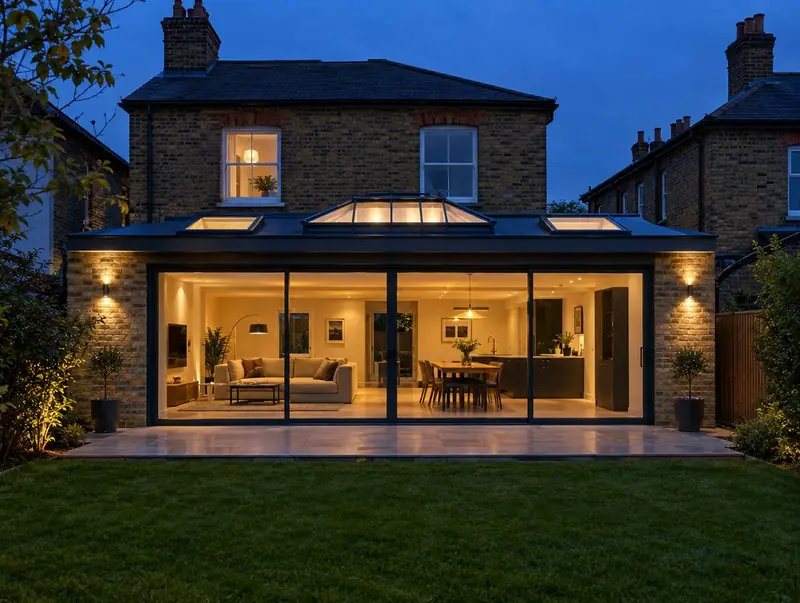
Fitting jobs in Peterlee
Fitting & replacement
- Fit-only rooflight installation · from £445
- Rooflight replacement · from £1,095
- New rooflight in an existing roof · from £2,295
- Rooflight upstands & kerbs · from £245
- Rooflight glass replacement · from £445
- Rooflight leak repairs · from £145
Flat roof rooflights
- Flat rooflight installation · from £995
- Frameless rooflight installation · from £1,445
- Electric opening rooflight installation · from £2,645
- Walk-on rooflight installation · from £3,345
- Sliding rooflight installation · from £7,795
- Roof access hatch installation · from £1,795
- Roof lantern installation · from £3,095
Pitched roofs & lofts
- Pitched roof window installation · from £845
- Loft conversion roof windows · from £1,795
- Conservation rooflight installation · from £1,145
- Sun tunnel installation · from £595
Commercial & trade
- Commercial rooflight installation · from £1,095
- Dome rooflight replacement · from £395
- Smoke vent rooflight installation · from £3,595
- Trade rooflight fitting · from £295 + VAT
Why use a rooflight fitting specialist
Builders run many trades at once, and the rooflight often gets squeezed in between the roofer and the plasterer. That is when corners get cut: an upstand built a little low, sealant applied in damp conditions, a reveal left rough. Bringing in a fitting specialist for that one stage means someone is focused on it alone, following the maker's instructions, with time set aside to finish the inside properly. The builder keeps control of the programme, and the rooflight gets proper attention.
Fitting in Peterlee and beyond
Postcodes SR8, TS28 and TS27 are the core of our Peterlee coverage, but they are not the boundary. Addresses in Seaham, Hartlepool and Houghton-Le-Spring are handled in just the same way, with fitters travelling to each one and travel costs built into the quote before you agree to anything. If you are unsure which side of a boundary you fall on, the full postcode settles it.
Planning and building control
Two sets of rules matter in England. Planning: a rooflight on a house is normally permitted development if it projects no more than 0.15 m and stays below the highest part of the roof, but flats, listed buildings and Article 4 areas need checking. Building regulations: new openings need approval for the structure and energy performance, and a replacement is a controlled fitting. We are not registered with a competent person scheme, so we notify replacements to building control with a building notice and put the council's fee on the quote.
Questions about rooflight fitting in Peterlee
Do you cover Peterlee?
Yes. Fitters travel to addresses in Peterlee and the surrounding districts, including SR8. We do not run an office there; the survey and the fitting happen at your property. A few island and remote postcodes are covered by arrangement; if yours is one, we confirm travel and dates before quoting.
What is included in the price?
The written quote lists it line by line. Typically that covers fitting labour, fixings, sealants, membrane or flashing materials, any upstand work, internal finishing if agreed, and taking away the waste. For supply and fit, the unit itself is included too. Scaffold, lifting gear and any third-party fees, where needed, are shown separately so you can see what each part of the job costs.
Do I need planning permission for a rooflight in Peterlee?
Often not. Many rooflights fall under permitted development, provided they do not project beyond the national limit and meet the other conditions that apply in England. Conservation areas, listed buildings and some flats are different and may need consent. Because the rules depend on the property, we confirm what is likely to apply at your address and point you to the planning authority where an application is needed.
What upstand height and roof pitch does rooflight fitting need?
It depends on the product. Manufacturers usually specify a minimum upstand height above the finished roof surface, and a minimum pitch on the glass so rain runs off. We follow the maker's figures for your unit rather than a rule of thumb. If your existing kerb or roof falls short, we explain the options, such as raising the upstand or choosing a unit with built-in pitch.