How does an electric opening rooflight work?
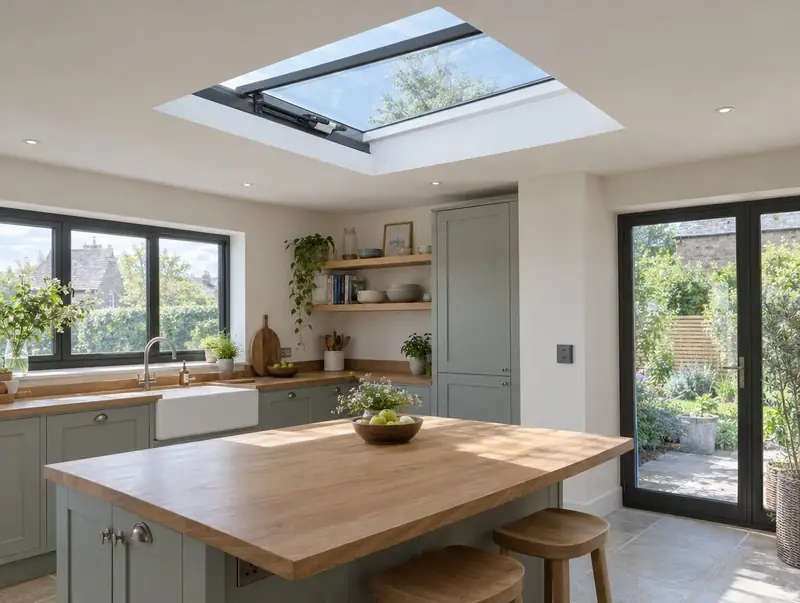
The glass is mounted on a hinged or sliding frame, moved by one or more actuators. These are small electric motors driving a chain or spindle that pushes the glass open and pulls it shut. A control unit takes power from the mains, or from a solar panel and battery on some models, and sends it to the actuators when you press a switch or remote. Common opening types are:
- Hinged: the glass lifts from one side, opening a gap for ventilation.
- Lifting: the whole glass panel rises evenly on actuators at each corner.
- Sliding: the glass slides over the fixed roof to open a large part of the opening, often for roof access.
The opening type affects the kerb. A hinged unit needs room on the roof for the glass to swing up. A sliding unit needs a clear, flat run of roof beside the opening for the glass to travel over, with nothing in the way such as a parapet, vent or outlet.
What do rain sensors and controls do?
A rain sensor is a small plate on the frame that detects water and tells the control unit to close the rooflight. It means you can leave the unit open for ventilation and it shuts itself when a shower arrives. Controls vary from a wall switch to a handheld remote, a wall keypad or a smart-home connection. Ask the maker what is included and what is optional before ordering, because sensors and controls are sometimes extras.
A rain sensor needs to be kept clean and clear of debris to work, and it does not react instantly to the first drop, so a little rain may get in before the glass is fully closed.
Who does the wiring?
A qualified electrician. We fit the rooflight, the kerb and the weathering, and set the unit in place ready for connection. The electrician runs the supply, connects the control unit and tests it. One maker's guide says that actuator cable extensions must be done by a qualified electrician, that the control box needs a 3-pin socket within 400 mm, and that cable cores should be at least 1.5 mm² up to 10 m and at least 2.5 mm² for runs of 10 to 15 m. Follow your product's own figures. Plan the cable route before the ceiling is boarded, so it runs inside the reveal or ceiling void and nobody has to chase into new plaster.
The best order of work is usually: electrician runs a supply to the agreed control box position during first fix, we fit the unit and bring the actuator cable through the kerb, the electrician connects and tests, and only then is the reveal boarded and finished. Booking the two trades to suit that order avoids a second visit.
How is an electric unit fitted differently?
- The kerb is built to the maker's sizes and fall, with a route for the cable through the kerb or reveal.
- The cable is pulled through and protected before the unit goes down, so it is not trapped or cut by the frame.
- The unit is lowered on, bedded and fixed. Opening units are heavier than fixed ones, so lifting is planned.
- The membrane is dressed up the kerb and finished under the frame, leaving the opening frame free to move.
- The electrician connects the supply and the controls.
- The unit is run through its full travel several times, the rain sensor is tested with water, and the controls are shown to you.
What safety points should you think about?
Approved Document K deals with protection from falling, collision and impact, and the rooflight industry notes that an opening rooflight can act as a barrier when it is fully open. Whether that matters depends on the design: a rooflight that opens onto a roof terrace or is reachable from a roof edge is a different case from one well out of reach. If your rooflight will be near a walkway, terrace or anywhere people can reach, raise it at the design stage. A few further points:
- the glass should be toughened or laminated, as with any rooflight people may come into contact with;
- keep children and pets clear of the opening edge while it moves;
- a sliding unit used for roof access needs safe access arrangements on the roof itself.
Can an opening rooflight be used for ventilation or escape?
Ventilation, yes. An opening rooflight at the top of a room is one of the best ways to clear warm, damp air from a kitchen or bathroom, and it helps with summer overheating. Escape is a different question. Whether a rooflight can count as an escape window depends on its size, position and how it opens, and on the fire safety design for the building. Ask building control before relying on a rooflight for escape. Smoke vents for common stairs are a separate product, covered in our smoke vent and AOV guide.
What maintenance do they need?
- Keep the glass, seals and rain sensor clean, and clear leaves from round the frame.
- Open and close the unit regularly, so the seals and actuators do not stick.
- Check the chain or spindle and hinges for dirt or damage, as the maker's guide describes.
- Follow any inspection the warranty requires; at least one maker makes an annual check of fixings, vents and sealing tape a condition of its warranty.
- Replace remote batteries and, on solar units, keep the panel clean.
If the unit stops moving, check the power and the rain sensor first. A wet or dirty sensor will often hold the unit shut. Actuator faults go back to the maker under warranty, or to an electrician.
How do you get one fitted?
Choose the product, the control options and where the switch or control box will go, then send us the details along with photos of the roof and room. We price the fitting, kerb and weathering, and say what the electrician will need to do. See electric opening rooflight installation, sliding rooflight installation, or use the quote form.
Questions
Do electric rooflights close automatically when it rains?
Most do, if they have a rain sensor fitted and connected. The sensor detects water and tells the control unit to close the glass. A few drops may get in before it is fully shut. Check the sensor is included with your model, and keep it clean, because dirt or leaves can stop it working.
Can I have a solar-powered rooflight to avoid wiring?
Some makers offer solar-powered versions with a panel and battery, which avoids running a mains supply. They suit roofs where a cable run would be difficult. They depend on daylight to recharge, so check the maker's guidance on use through winter. The unit is fitted and weathered in the same way as a mains one.
Who fixes it if the motor stops working?
A faulty actuator or control unit is a product issue, so it goes to the maker or seller under the warranty. A wiring or supply fault goes to the electrician who connected it. If the unit leaks at the kerb or frame, that is a fitting matter for whoever installed it. Check the rain sensor and power before calling anyone.