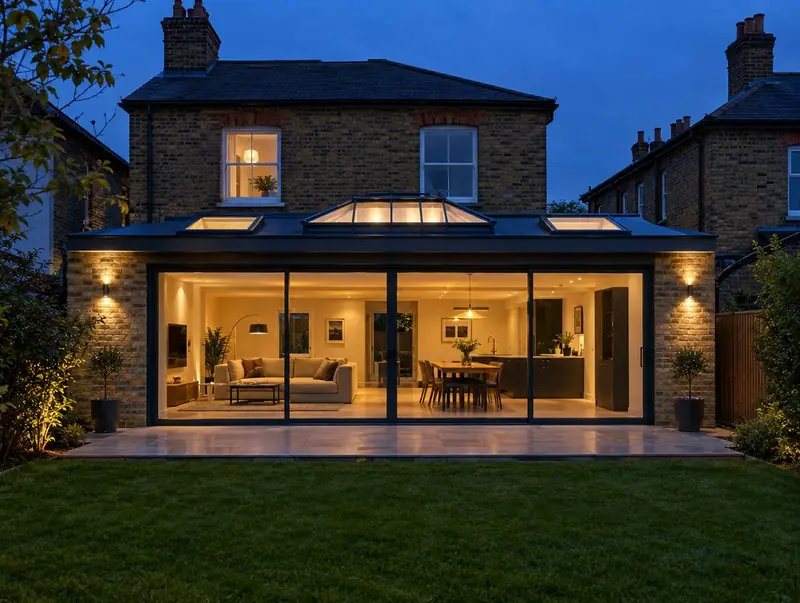
What the job costs in Tynemouth
Entry-level hatch
Polycarbonate or entry-level hinged hatch on gas struts, fitted to a new or existing upstand
Glazed manual hatch
Double-glazed hinged hatch on gas struts, upstand and weathering
Electric glazed hatch
Push-button glazed hatch with rain sensor; electrician's connection quoted separately
Guide ranges for supply & fit. Your price is fixed in a written quote after we have seen photos or surveyed. Scaffold, access towers or a crane are priced separately if the job needs them, and building control fees, where a job needs them, are shown as their own line.
Where our fitters travel
If you also own a property or a business unit in North Shields, South Shields or Whitley Bay, that is no problem. We can survey and quote both, and where it suits, line the fitting days up together. Every address is reached by fitters travelling to it from their current jobs, and NE30, NE29 and NE33 sit comfortably within that pattern.
Already bought your unit?
If you have bought a roof access hatch yourself, we check four things before fitting. First, the delivery: open it, look for chips, cracks and bent frames, and report any damage to the seller straight away. Second, the size, measured against the builder's opening rather than the external frame. Third, the upstand height above the finished roof. Fourth, the maker's instructions, which set the fixings and sealing. Product warranty claims go to the seller and maker; our guarantee is for how it was fitted.
Included in the work
- Kerb checked or built square, level and to the maker's height
- Opening and upstand sized for a clear climb-through, not just daylight
- Opening and closing tested and the controls explained
- Clear opening size — We check the hatch's clear opening rather than its outer size.
- How far the lid opens — We check how far the lid swings open and what it swings over.
How a fitting day runs
Arrive and agree the plan. Sheet the floor and furniture. Set up the ladder, tower or scaffold. Check the opening, the upstand or flashing, and the unit against the paperwork. Fix and pack a roof access hatch level. Seal it into the roof. Line the reveal or fit the ceiling trim. Clean the glass, clear the waste, and talk you through it. That is the shape of most fitting days, and for this type of job it usually takes one day.
Planning, building control and Tynemouth
In England, a new rooflight opening generally needs building regulations approval because the roof structure is altered and the glazing must meet energy rules: 2.2 W/m²K for a rooflight in an existing home, or 1.4 W/m²K (or WER Band B) for a roof window. Planning is often not needed on a house: permitted development covers rooflights that stand no more than 0.15 m proud of the roof slope and sit below the highest part of the roof. Flats, listed buildings and areas with an Article 4 direction are different, so we check your address first.
Before you get in touch
Start with your phone. Take a picture of the roof where the unit goes or already sits, then one from inside looking up. Measure what you can, even roughly. Tell us what the roof is covered with and how a fitter would reach it: ladder, garden access or scaffold. Bought it already? Send the link or spec. Add your full postcode, for example in NE30, and we can price it.
Common questions in Tynemouth
Can you remove and dispose of the old rooflight?
Yes. Taking out the old unit is part of any replacement job, and it leaves with the rest of the waste unless you ask to keep it. Old domes, glass and frames go through proper waste routes. If removal turns up a rotten kerb or damaged decking, we show you what we have found and agree the repair with you before going any further.
Do you cover Tynemouth?
Yes. Fitters travel to addresses in Tynemouth and the surrounding districts, including NE30. We do not run an office there; the survey and the fitting happen at your property. A few island and remote postcodes are covered by arrangement; if yours is one, we confirm travel and dates before quoting.
Do you need scaffolding to fit a rooflight?
Not always. Single-storey roofs can often be reached safely with ladders, a tower or edge protection. Higher roofs, steep pitches and large units usually need scaffold or a mobile platform, and heavy glass may need a crane. We assess access from your photos or at the survey, and any scaffold or lifting cost is shown as its own line on the written quote.
Get in touch with the details of your Tynemouth property and we will explain what the job involves and what it costs.