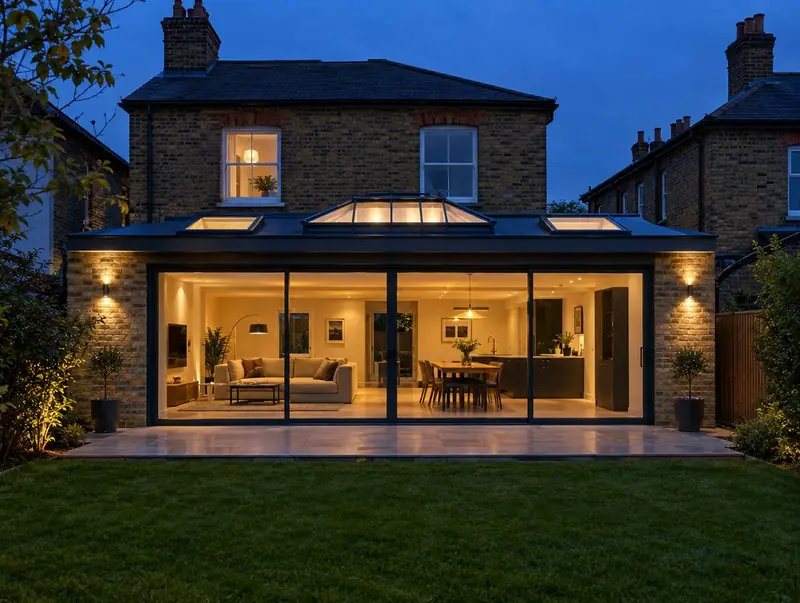
Guide prices
Small fixed
Double-glazed fixed unit up to 1000 × 1000 mm, fitted to a ready upstand
Medium fixed
1000 × 1500 to 1000 × 2000 mm, double or triple glazed
Large fixed
Bigger units, solar-control glass, two-person lift or lifting gear
Guide ranges for supply & fit. Your price is fixed in a written quote after we have seen photos or surveyed. Scaffold, access towers or a crane are priced separately if the job needs them, and building control fees, where a job needs them, are shown as their own line.
Areas around Dudley we cover
Distance is rarely the deciding factor. A roof in Brierley Hill, 2 miles from Dudley, gets the same survey, the same written quote and the same fitting process as one in DY2, DY1 and B64. What changes the price is the job itself: size of unit, roof type, access and lifting. Tipton, around 2 miles out, is treated the same way.
What we check on a supplied unit
Supply and fit tends to suit people who would rather not pick a unit from a catalogue. We look at the roof, the opening and how you use the room, then put a flat rooflight on the quote that fits all three. Fit-only suits people who already know what they want, or have one on site. We are happy with either. The difference is who stands behind what: on fit-only, the maker or retailer covers the product, and our workmanship guarantee covers the installation.
What the job includes
- Unit bedded on the specified sealant or tape and screw-fixed
- Lifting gear or extra hands arranged for large and heavy panes
- Fall confirmed so rain runs off the glass rather than sitting on it
- Pitch of the glass — We make sure the glass will sit at the pitch its maker asks for.
- Fixed or opening — We ask whether you need ventilation before you settle on a fixed unit.
From arrival to clean-up
Fitting days start with a look at the sky. If rain is due, the order of work changes so the roof is never left open to it. A typical day for a flat rooflight runs like this: set up access, protect the room, open up the roof or prepare the existing kerb or frame, check sizes, fix, seal, then finish inside. On jobs that take more than a day, the opening is weather-sealed overnight. The last hour goes on tidying, waste removal and a walk-round with you.
Planning, building control and Dudley
In England, a new rooflight opening generally needs building regulations approval because the roof structure is altered and the glazing must meet energy rules: 2.2 W/m²K for a rooflight in an existing home, or 1.4 W/m²K (or WER Band B) for a roof window. Planning is often not needed on a house: permitted development covers rooflights that stand no more than 0.15 m proud of the roof slope and sit below the highest part of the roof. Flats, listed buildings and areas with an Article 4 direction are different, so we check your address first.
Before you get in touch
Start with your phone. Take a picture of the roof where the unit goes or already sits, then one from inside looking up. Measure what you can, even roughly. Tell us what the roof is covered with and how a fitter would reach it: ladder, garden access or scaffold. Bought it already? Send the link or spec. Add your full postcode, for example in DY2, and we can price it.
Common questions in Dudley
How long does fitting take?
Fitting a flat rooflight into an existing, correctly sized opening is often a day's work. New openings take longer, because joists or rafters need trimming, an upstand or flashing has to be built or fitted, and the inside needs finishing. Large units that need lifting gear, and days lost to rain, can stretch things further. Your written quote gives a realistic estimate for your roof.
Does a rooflight need building regulations approval?
A new opening usually needs building regulations approval. A replacement is a controlled fitting: it must be self-certified by an installer registered with a competent person scheme or notified to building control. We are not registered with a scheme, so replacements we fit are notified to building control with a building notice, and the council's fee is shown on your quote.
Do you make good inside after fitting?
Yes, where the quote includes it. Internal finishing usually means lining the reveal with plasterboard, taping or skimming, and fitting trim where it meets the ceiling. Some people prefer their own plasterer or decorator to finish off, which is fine. The written quote spells out exactly where our work stops, so nobody is left guessing about who does what once the unit is in.
Tell us your postcode, DY2 or close by, and what you want fitted. We will reply with the next steps and a quote.