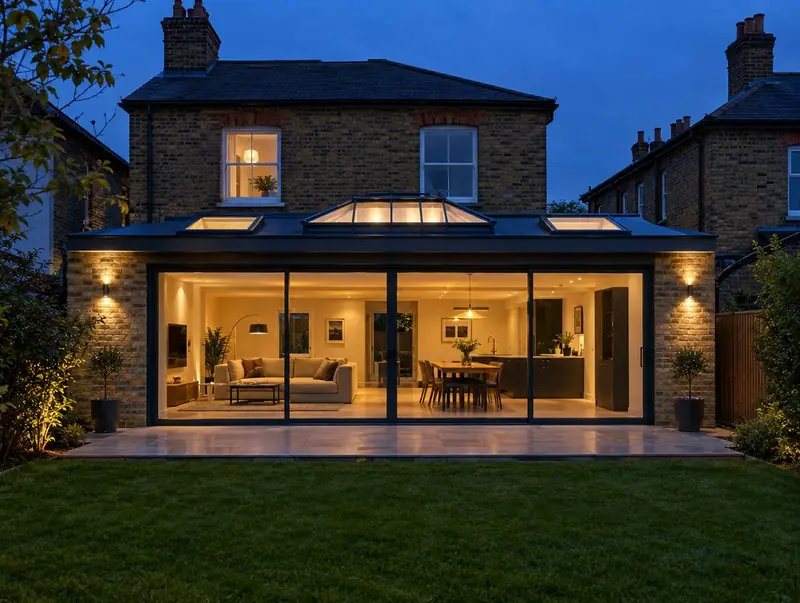
Fitting jobs in Atherton
Fitting & replacement
- Fit-only rooflight installation · from £445
- Rooflight replacement · from £1,095
- New rooflight in an existing roof · from £2,295
- Rooflight upstands & kerbs · from £245
- Rooflight glass replacement · from £445
- Rooflight leak repairs · from £145
Flat roof rooflights
- Flat rooflight installation · from £995
- Frameless rooflight installation · from £1,445
- Electric opening rooflight installation · from £2,645
- Walk-on rooflight installation · from £3,345
- Sliding rooflight installation · from £7,795
- Roof access hatch installation · from £1,795
- Roof lantern installation · from £3,095
Pitched roofs & lofts
- Pitched roof window installation · from £845
- Loft conversion roof windows · from £1,795
- Conservation rooflight installation · from £1,145
- Sun tunnel installation · from £595
Commercial & trade
- Commercial rooflight installation · from £1,095
- Dome rooflight replacement · from £395
- Smoke vent rooflight installation · from £3,595
- Trade rooflight fitting · from £295 + VAT
Why the fitting matters as much as the unit
Product warranties on rooflights usually depend on the unit being fitted to the maker's instructions. Those instructions cover upstand height, fixing centres, sealants, and how the roof covering is dressed in. Following them line by line takes familiarity with how different units go together. A specialist fitter reads the paperwork, checks the delivery and measures the opening before starting, then fits to the book. If something on site does not match, they flag it rather than improvising. That protects both the roof and the warranty.
Nearby towns we also cover
Our fitters cover all of Atherton, including M46, M29 and BL5, and travel on to Tyldesley, Westhoughton and Leigh on the same basis. Nobody needs to visit us, because we come to the property for surveys and fitting. Dates are offered according to fitter availability, and travel is part of the written quote rather than an extra.
Planning and building control
Replacing a rooflight in an English home is a controlled fitting: it has to be self-certified by a scheme-registered installer or notified to building control. We are not registered with a competent person scheme, so replacements we fit are notified with a building notice, and the new unit has to meet current energy limits. Adding a new one usually means a building regulations application, because joists or rafters are trimmed. On the planning side, most house rooflights are permitted development if they project 0.15 m or less; on a side slope the glass must be obscured and fixed unless the opening part is over 1.7 m above the floor.
Questions about rooflight fitting in Atherton
Will my new rooflight leak?
A correctly fitted unit should not. Leaks usually trace back to the detail around the frame: an upstand that is too low, a membrane or flashing that is not dressed properly, sealant applied to a damp surface, or water ponding against the kerb. We fit to the maker's instructions and check each of those points. The fitting carries a written workmanship guarantee, with its terms set out on your quote.
What upstand height and roof pitch does rooflight fitting need?
It depends on the product. Manufacturers usually specify a minimum upstand height above the finished roof surface, and a minimum pitch on the glass so rain runs off. We follow the maker's figures for your unit rather than a rule of thumb. If your existing kerb or roof falls short, we explain the options, such as raising the upstand or choosing a unit with built-in pitch.
What is included in the price?
The written quote lists it line by line. Typically that covers fitting labour, fixings, sealants, membrane or flashing materials, any upstand work, internal finishing if agreed, and taking away the waste. For supply and fit, the unit itself is included too. Scaffold, lifting gear and any third-party fees, where needed, are shown separately so you can see what each part of the job costs.
Can you fit a rooflight in winter or when it is raining?
Yes, within limits. Cold is less of a problem than wet, because membranes, primers and sealants need a dry surface to bond. We plan fitting days around the forecast and may move a date if heavy rain is due. If the roof has to be opened up, it is not left overnight without a temporary weather seal, so the room below stays dry while the work is finished.