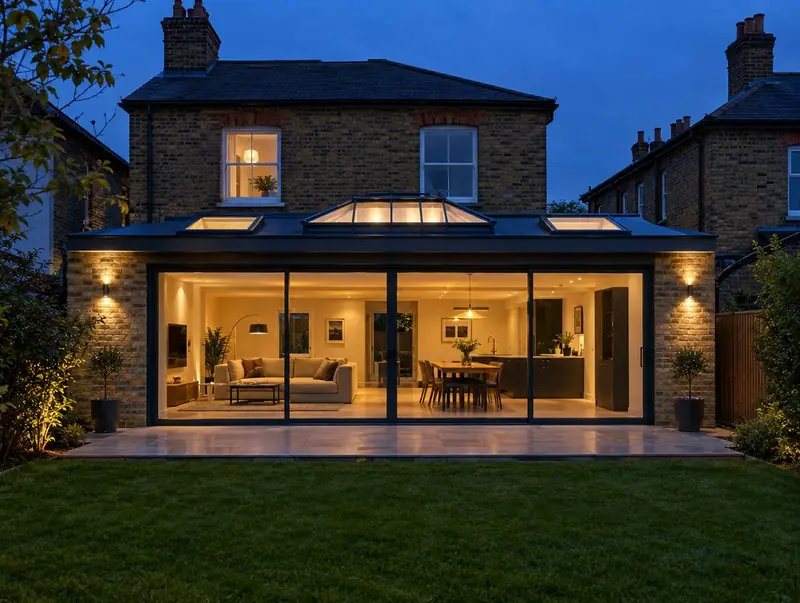
Guide prices in Sandown
About 1 × 2 m
Aluminium lantern, double glazed, fitted and glazed on a ready upstand
About 1.5 × 3 m
Mid-size lantern, solar-control glass options
2 × 4 m and over
Large lanterns, lifting gear on the day
Guide ranges for supply & fit. Your price is fixed in a written quote after we have seen photos or surveyed. Scaffold, access towers or a crane are priced separately if the job needs them, and building control fees, where a job needs them, are shown as their own line.
Areas around Sandown we cover
Distance is rarely the deciding factor. A roof in Ryde, 5 miles from Sandown, gets the same survey, the same written quote and the same fitting process as one in PO36, PO37 and PO35. What changes the price is the job itself: size of unit, roof type, access and lifting. Newport, around 7 miles out, is treated the same way.
Buying your own, or letting us supply
Supply and fit tends to suit people who would rather not pick a unit from a catalogue. We look at the roof, the opening and how you use the room, then put a roof lantern on the quote that fits all three. Fit-only suits people who already know what they want, or have one on site. We are happy with either. The difference is who stands behind what: on fit-only, the maker or retailer covers the product, and our workmanship guarantee covers the installation.
On the day, we cover
- Roof membrane checked where it meets the lantern frame
- Frame assembled on the kerb in the maker's set order
- Glass lifted and laid into the frame by hand or with gear
- Heat and glare — We talk through the glass options before you order a large lantern.
- Upstand size and tolerance — We check the kerb against the lantern maker's figures before the kit is opened.
Fitting your roof lantern, step by step
Morning first: the team arrives, introduces itself and walks through the job with you. Dust sheets go down in the room below and along the route in. Then the opening and upstand, or the flashing on a pitched roof, are checked against the unit's measurements. A roof lantern goes in, is fixed to the maker's pattern and sealed into the roof covering. Inside, the reveal is finished as quoted. Before leaving, the team clears debris and talks you through what was done. Most jobs of this type take one to two days.
Planning and building rules in England
Replacing a rooflight in an English home is a controlled fitting: it has to be self-certified by a scheme-registered installer or notified to building control. We are not registered with a competent person scheme, so replacements we fit are notified with a building notice, and the new unit has to meet current energy limits. Adding a new one usually means a building regulations application, because joists or rafters are trimmed. On the planning side, most house rooflights are permitted development if they project 0.15 m or less; on a side slope the glass must be obscured and fixed unless the opening part is over 1.7 m above the floor.
What to send for a quick quote
A fast quote needs five things: a photo of the roof from outside, one from the room below, rough sizes of the opening or the space, the roof covering (felt, single-ply, fibreglass, tiles, slate or metal), and a note on access. If you have already bought the unit, add the product link or spec sheet. And give us the postcode, PO36 or a neighbouring district.
Common questions in Sandown
Can you fit a rooflight in winter or when it is raining?
Yes, within limits. Cold is less of a problem than wet, because membranes, primers and sealants need a dry surface to bond. We plan fitting days around the forecast and may move a date if heavy rain is due. If the roof has to be opened up, it is not left overnight without a temporary weather seal, so the room below stays dry while the work is finished.
Can you remove and dispose of the old rooflight?
Yes. Taking out the old unit is part of any replacement job, and it leaves with the rest of the waste unless you ask to keep it. Old domes, glass and frames go through proper waste routes. If removal turns up a rotten kerb or damaged decking, we show you what we have found and agree the repair with you before going any further.
Do you make good inside after fitting?
Yes, where the quote includes it. Internal finishing usually means lining the reveal with plasterboard, taping or skimming, and fitting trim where it meets the ceiling. Some people prefer their own plasterer or decorator to finish off, which is fine. The written quote spells out exactly where our work stops, so nobody is left guessing about who does what once the unit is in.
Planning a roof lantern in Sandown? Tell us about the roof and we will come back with a clear price in writing.