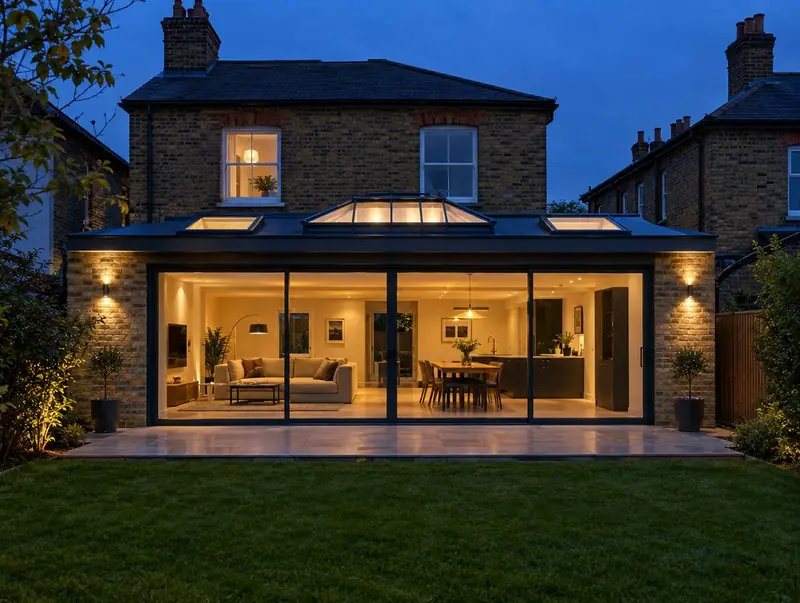
Guide prices
Small fixed
Double-glazed fixed unit up to 1000 × 1000 mm, fitted to a ready upstand
Medium fixed
1000 × 1500 to 1000 × 2000 mm, double or triple glazed
Large fixed
Bigger units, solar-control glass, two-person lift or lifting gear
Guide ranges for supply & fit. Your price is fixed in a written quote after we have seen photos or surveyed. Scaffold, access towers or a crane are priced separately if the job needs them, and building control fees, where a job needs them, are shown as their own line.
Coverage in and around Arnold
Distance is rarely the deciding factor. A roof in Basford, 3 miles from Arnold, gets the same survey, the same written quote and the same fitting process as one in NG5, NG3 and NG6. What changes the price is the job itself: size of unit, roof type, access and lifting. Nottingham, around 3 miles out, is treated the same way.
Already bought your unit?
Your unit or ours, the fitting standard is the same. For supply and fit we choose a flat rooflight to suit the roof and price it with the installation. For fit-only we work with what you have, after confirming it arrived undamaged, that it matches the builder's opening, and that the upstand will sit at the height the maker asks for. Report any transit damage to the seller, as the product cover is theirs and the maker's. Our written guarantee applies to the fitting itself.
What the job includes
- Product paperwork handed over and warranty registration explained
- Upstand checked or built to the maker's internal and external sizes
- Unit bedded on the specified sealant or tape and screw-fixed
- Fixed or opening — We ask whether you need ventilation before you settle on a fixed unit.
- Ceiling and reveal depth — We measure the depth from the kerb top to the ceiling to plan the reveal.
Fitting your flat rooflight, step by step
Where a job takes one day, the split is usually structural work first and finishing second. Early on, the fitters cut or prepare the opening, trim where needed and prepare the upstand or flashing. Then a flat rooflight is lifted in, fixed and made weathertight so the roof is sound before anyone moves inside. Plasterboard, trim and filler for the reveal come after. Each evening the work area is swept, and at the end the glass is cleaned and the team talks you through what was done.
Regulations for Arnold properties
In England, a new rooflight opening generally needs building regulations approval because the roof structure is altered and the glazing must meet energy rules: 2.2 W/m²K for a rooflight in an existing home, or 1.4 W/m²K (or WER Band B) for a roof window. Planning is often not needed on a house: permitted development covers rooflights that stand no more than 0.15 m proud of the roof slope and sit below the highest part of the roof. Flats, listed buildings and areas with an Article 4 direction are different, so we check your address first.
Details that speed up your quote
A fast quote needs five things: a photo of the roof from outside, one from the room below, rough sizes of the opening or the space, the roof covering (felt, single-ply, fibreglass, tiles, slate or metal), and a note on access. If you have already bought the unit, add the product link or spec sheet. And give us the postcode, NG5 or a neighbouring district.
Common questions in Arnold
Can you replace an old dome without redoing the whole roof?
Usually, yes. If the existing kerb is sound, level and tall enough, a new unit can often sit on it with a fresh seal to the roof covering. If the kerb is rotten or too low, we rebuild it and patch the covering around it rather than stripping the whole roof. This is checked at the survey and included in the written quote, so you know the full scope first.
Can you remove and dispose of the old rooflight?
Yes. Taking out the old unit is part of any replacement job, and it leaves with the rest of the waste unless you ask to keep it. Old domes, glass and frames go through proper waste routes. If removal turns up a rotten kerb or damaged decking, we show you what we have found and agree the repair with you before going any further.
Do you make good inside after fitting?
Yes, where the quote includes it. Internal finishing usually means lining the reveal with plasterboard, taping or skimming, and fitting trim where it meets the ceiling. Some people prefer their own plasterer or decorator to finish off, which is fine. The written quote spells out exactly where our work stops, so nobody is left guessing about who does what once the unit is in.
Questions before you commit? Send them over with your Arnold postcode and we will answer them plainly, with a quote alongside.