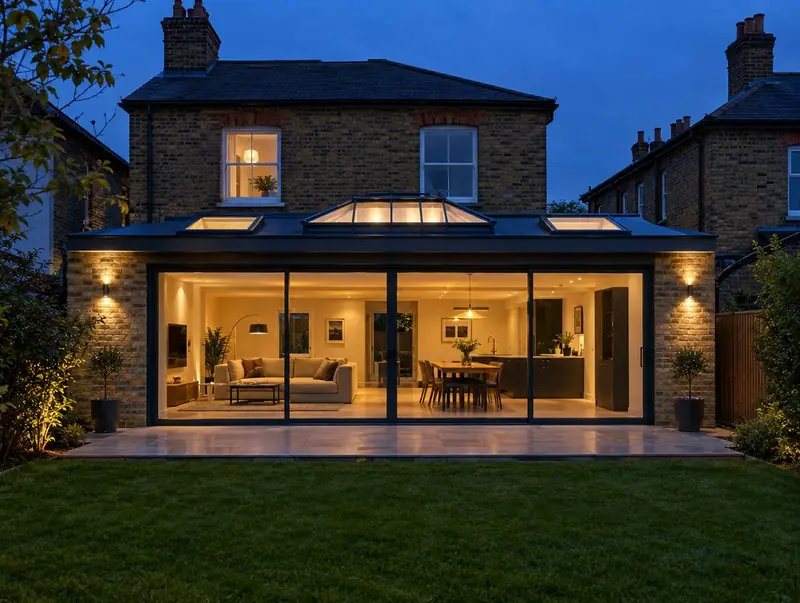
Darlington guide prices
Small fixed
Double-glazed fixed unit up to 1000 × 1000 mm, fitted to a ready upstand
Medium fixed
1000 × 1500 to 1000 × 2000 mm, double or triple glazed
Large fixed
Bigger units, solar-control glass, two-person lift or lifting gear
Guide ranges for supply & fit. Your price is fixed in a written quote after we have seen photos or surveyed. Scaffold, access towers or a crane are priced separately if the job needs them, and building control fees, where a job needs them, are shown as their own line.
Covering DL1 and neighbouring districts
Jobs across DL1, DL3 and DL2 are part of our normal cover for Darlington. We are not an office on the high street. Our fitting teams come out to the property from wherever they are working that week. Neighbouring places such as Newton Aycliffe and Yarm are covered on the same terms, so a house on the edge of town is no harder to book than one in the centre.
What we check on a supplied unit
A damaged delivery is a frequent snag on fit-only work. Before the day, unpack a flat rooflight, photograph it, and tell the seller about any cracks or scuffs, because claims are much easier made early. We will also ask for the model or a link, so we can read the maker's instructions and check the builder's opening size and the upstand height it expects. If everything lines up, we fit it. If not, we explain what needs changing first.
Included in the work
- Unit bedded on the specified sealant or tape and screw-fixed
- Fall confirmed so rain runs off the glass rather than sitting on it
- Membrane, felt or GRP finished to the frame the way the maker shows
- Pitch of the glass — We make sure the glass will sit at the pitch its maker asks for.
- Solar gain on south-facing roofs — We ask which way the roof faces and how the room is used before suggesting glass.
How a fitting day runs
Where a job takes one day, the split is usually structural work first and finishing second. Early on, the fitters cut or prepare the opening, trim where needed and prepare the upstand or flashing. Then a flat rooflight is lifted in, fixed and made weathertight so the roof is sound before anyone moves inside. Plasterboard, trim and filler for the reveal come after. Each evening the work area is swept, and at the end the glass is cleaned and the team talks you through what was done.
Regulations for Darlington properties
Replacing a rooflight in an English home is a controlled fitting: it has to be self-certified by a scheme-registered installer or notified to building control. We are not registered with a competent person scheme, so replacements we fit are notified with a building notice, and the new unit has to meet current energy limits. Adding a new one usually means a building regulations application, because joists or rafters are trimmed. On the planning side, most house rooflights are permitted development if they project 0.15 m or less; on a side slope the glass must be obscured and fixed unless the opening part is over 1.7 m above the floor.
Getting a price from photos
For fit-only work, the product details matter most: the link, the spec sheet, or a photo of the label on the box. Alongside that, send pictures of the roof and the ceiling below, approximate opening sizes, the type of roof covering, and how someone would get onto the roof. For supply and fit, the same photos and sizes do the job. Finish with your postcode, such as DL1.
Common questions in Darlington
What upstand height and roof pitch does flat rooflight fitting need?
It depends on the product. Manufacturers usually specify a minimum upstand height above the finished roof surface, and a minimum pitch on the glass so rain runs off. We follow the maker's figures for your unit rather than a rule of thumb. If your existing kerb or roof falls short, we explain the options, such as raising the upstand or choosing a unit with built-in pitch.
How long does fitting take?
Fitting a flat rooflight into an existing, correctly sized opening is often a day's work. New openings take longer, because joists or rafters need trimming, an upstand or flashing has to be built or fitted, and the inside needs finishing. Large units that need lifting gear, and days lost to rain, can stretch things further. Your written quote gives a realistic estimate for your roof.
Do you make good inside after fitting?
Yes, where the quote includes it. Internal finishing usually means lining the reveal with plasterboard, taping or skimming, and fitting trim where it meets the ceiling. Some people prefer their own plasterer or decorator to finish off, which is fine. The written quote spells out exactly where our work stops, so nobody is left guessing about who does what once the unit is in.
For a free, no-obligation quote in Darlington, use the form or call us with the details of your roof.