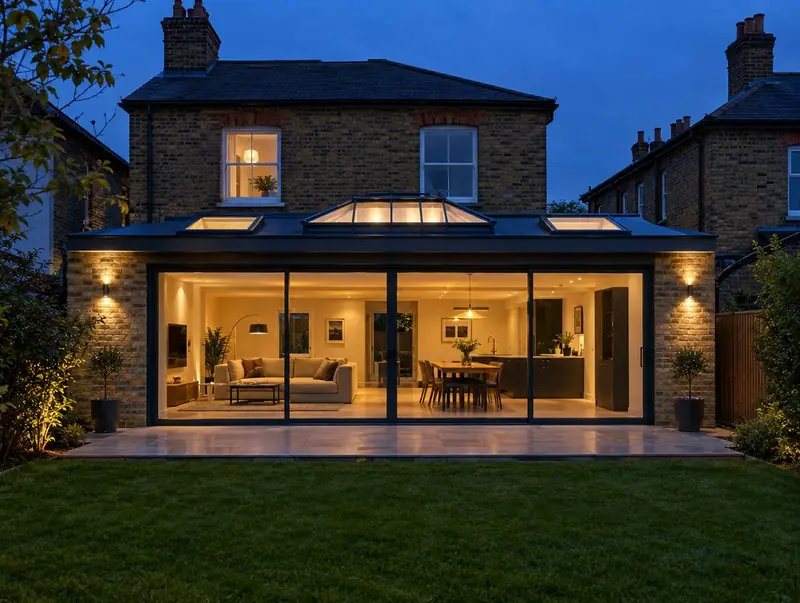
Fitting jobs in Stamford Hill
Fitting & replacement
- Fit-only rooflight installation · from £445
- Rooflight replacement · from £1,095
- New rooflight in an existing roof · from £2,295
- Rooflight upstands & kerbs · from £245
- Rooflight glass replacement · from £445
- Rooflight leak repairs · from £145
Flat roof rooflights
- Flat rooflight installation · from £995
- Frameless rooflight installation · from £1,445
- Electric opening rooflight installation · from £2,645
- Walk-on rooflight installation · from £3,345
- Sliding rooflight installation · from £7,795
- Roof access hatch installation · from £1,795
- Roof lantern installation · from £3,095
Pitched roofs & lofts
- Pitched roof window installation · from £845
- Loft conversion roof windows · from £1,795
- Conservation rooflight installation · from £1,145
- Sun tunnel installation · from £595
Commercial & trade
- Commercial rooflight installation · from £1,095
- Dome rooflight replacement · from £395
- Smoke vent rooflight installation · from £3,595
- Trade rooflight fitting · from £295 + VAT
Why use a rooflight fitting specialist
Large glass units are heavy, awkward and expensive to replace if dropped. Getting one onto a roof may need a hoist, a crane or a planned lift from a scaffold. Fitting it means setting it level on packers, without twisting the frame, while the weather holds. A general builder may do this a few times a year. A rooflight fitting team plans the lift, the equipment and the sequence before the day. That lowers the risk to the unit and to the people lifting it.
Covering Stamford Hill and surrounding areas
Need a rooflight fitted in Stamford Hill or close by? Districts N16, N15 and E5 are covered, as are Harringay, Highbury and Hackney. If you manage several properties across these places, we can quote them together and plan the fitting days so the route makes sense. Larger units or awkward access at any of them are planned for at quote stage, so the day itself runs to plan.
Do you need permission in Stamford Hill?
England's rules in short: permitted development usually covers a rooflight on a house roof provided it doesn't stick out more than 0.15 m or rise above the ridge, though a listed building always needs consent and some streets have Article 4 directions. Building regulations apply to new openings, and replacements go through building control; as we are not registered with a competent person scheme, we use a building notice and show the fee on the quote. The energy limit for rooflights in existing homes is 2.2 W/m²K, and the 2026 Approved Document L, in force from 24 March 2027, keeps that figure.
Questions about rooflight fitting in Stamford Hill
Will my new rooflight leak?
A correctly fitted unit should not. Leaks usually trace back to the detail around the frame: an upstand that is too low, a membrane or flashing that is not dressed properly, sealant applied to a damp surface, or water ponding against the kerb. We fit to the maker's instructions and check each of those points. The fitting carries a written workmanship guarantee, with its terms set out on your quote.
Do I need planning permission for a rooflight in Stamford Hill?
Often not. Many rooflights fall under permitted development, provided they do not project beyond the national limit and meet the other conditions that apply in England. Conservation areas, listed buildings and some flats are different and may need consent. Because the rules depend on the property, we confirm what is likely to apply at your address and point you to the planning authority where an application is needed.
Can you remove and dispose of the old rooflight?
Yes. Taking out the old unit is part of any replacement job, and it leaves with the rest of the waste unless you ask to keep it. Old domes, glass and frames go through proper waste routes. If removal turns up a rotten kerb or damaged decking, we show you what we have found and agree the repair with you before going any further.
Can you fit a rooflight in winter or when it is raining?
Yes, within limits. Cold is less of a problem than wet, because membranes, primers and sealants need a dry surface to bond. We plan fitting days around the forecast and may move a date if heavy rain is due. If the roof has to be opened up, it is not left overnight without a temporary weather seal, so the room below stays dry while the work is finished.