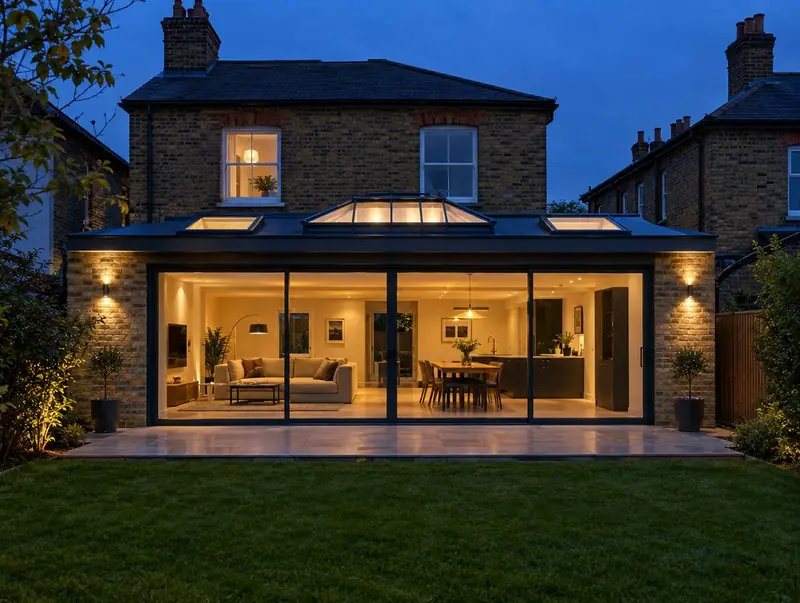
Fitting jobs in Harlesden
Fitting & replacement
- Fit-only rooflight installation · from £445
- Rooflight replacement · from £1,095
- New rooflight in an existing roof · from £2,295
- Rooflight upstands & kerbs · from £245
- Rooflight glass replacement · from £445
- Rooflight leak repairs · from £145
Flat roof rooflights
- Flat rooflight installation · from £995
- Frameless rooflight installation · from £1,445
- Electric opening rooflight installation · from £2,645
- Walk-on rooflight installation · from £3,345
- Sliding rooflight installation · from £7,795
- Roof access hatch installation · from £1,795
- Roof lantern installation · from £3,095
Pitched roofs & lofts
- Pitched roof window installation · from £845
- Loft conversion roof windows · from £1,795
- Conservation rooflight installation · from £1,145
- Sun tunnel installation · from £595
Commercial & trade
- Commercial rooflight installation · from £1,095
- Dome rooflight replacement · from £395
- Smoke vent rooflight installation · from £3,595
- Trade rooflight fitting · from £295 + VAT
Why the fitting matters as much as the unit
Large glass units are heavy, awkward and expensive to replace if dropped. Getting one onto a roof may need a hoist, a crane or a planned lift from a scaffold. Fitting it means setting it level on packers, without twisting the frame, while the weather holds. A general builder may do this a few times a year. A rooflight fitting team plans the lift, the equipment and the sequence before the day. That lowers the risk to the unit and to the people lifting it.
Nearby towns we also cover
Postcodes NW10, NW2 and W10 are the core of our Harlesden coverage, but they are not the boundary. Addresses in Willesden, Cricklewood and Wembley are handled in just the same way, with fitters travelling to each one and travel costs built into the quote before you agree to anything. If you are unsure which side of a boundary you fall on, the full postcode settles it.
Planning and building control
England's rules in short: permitted development usually covers a rooflight on a house roof provided it doesn't stick out more than 0.15 m or rise above the ridge, though a listed building always needs consent and some streets have Article 4 directions. Building regulations apply to new openings, and replacements go through building control; as we are not registered with a competent person scheme, we use a building notice and show the fee on the quote. The energy limit for rooflights in existing homes is 2.2 W/m²K, and the 2026 Approved Document L, in force from 24 March 2027, keeps that figure.
Questions about rooflight fitting in Harlesden
Do I need planning permission for a rooflight in Harlesden?
Often not. Many rooflights fall under permitted development, provided they do not project beyond the national limit and meet the other conditions that apply in England. Conservation areas, listed buildings and some flats are different and may need consent. Because the rules depend on the property, we confirm what is likely to apply at your address and point you to the planning authority where an application is needed.
Does a rooflight need building regulations approval?
A new opening usually needs building regulations approval. A replacement is a controlled fitting: it must be self-certified by an installer registered with a competent person scheme or notified to building control. We are not registered with a scheme, so replacements we fit are notified to building control with a building notice, and the council's fee is shown on your quote.
Do you offer trade rates for builders and roofers?
We carry out subcontract fitting for builders, roofers, extension companies and commercial contractors. Pricing is per job or per schedule of units, agreed in writing before we start. We can work to your programme, fit on your upstand or build our own, and leave the opening ready for the next trade. Send drawings or a unit schedule and we will come back with a trade quote.
What upstand height and roof pitch does rooflight fitting need?
It depends on the product. Manufacturers usually specify a minimum upstand height above the finished roof surface, and a minimum pitch on the glass so rain runs off. We follow the maker's figures for your unit rather than a rule of thumb. If your existing kerb or roof falls short, we explain the options, such as raising the upstand or choosing a unit with built-in pitch.